I want to get this idea out of my head and get back to mountains of pending work. Maybe I'll come back to this at a later date and refine it further.
Main point : Corporate greed in the television industry has created the present-day world problems of terrorism and religious extremism in the middle east and south asia. All the repeating terror attacks in both India and Pakistan, the rise of the Taliban in Afghanistan and now in Pakistan as well, Sri Lanka's ethnic conflicts, the Naxalite or Maoist violence in the interiors of India, Iraq's bloodbath of Sunnis Vs Shias as well as continued dominance of hardliners in Iran have been caused by a greedy business model that abused modern technology to line the pockets of a few individuals.
Sounds a little controversial? Let me rephrase it in a smaller line:
Paid Digital TV has caused all the religious/ethnic conflicts and terrorist strikes in our part of the world.
There, that should set some heads rolling. Now, I'll explain how:
disclaimer : I'm not saying that TV has caused all these problems - na, it's the opposite. I'm saying the that the conversion to paid digital of nearly all our channels has caused it.
I grew up as a son of an Indian expatriate engineer living in Saudi Arabia. It was a great childhood. TV was a huge part of all our lives. Back home in India, cable television too had mushroomed. In India, there were local cable networks bringing it home so you'd just stick an RF cable into your TV and have different channels tuned in. But in Saudi Arabia these networks weren't there. So, residents of a building or two would team up, buy and put up their own dish antenna's in the terraces of their buildings. In my building we had two dishes - a big one pointing in one direction and a smaller one pointing in the other. The cables coming out of there were simply joined together, and then split and dropped down the side of the building to all the residents' homes, and they went in via holes made in the air conditioner frames.
In our halls (why do we call it a living room, I lived in all the rooms) we had set-top boxes that took in these thick fat cables and tuned all the channels on different frequencies using several parameters - not just the one-dimensional LF/HF/UHF line of the TV. I remember there being different ways of tuning in audio and video. All the technicalities came right down to the end user and nothing was pre-programmed.
Although we thought nothing of it at the time, the hallmark here was practical simplicity : One dish antenna points at that particular satellite, and the wires coming out from that go down to our homes. No electricity used here. To add a new resident who'd recently moved in, we just put in a splitter or simply wound his wire round the existing ones. To get the channels right, we would simply dedicate an evening to taking the TV and the tuner up to the terrace, hooking it up there and physically moving the dish in all directions possible while looking at the screen to find the right orientation by trial and error. Many channels would come grainy but we did the best we could and lived with that.
I didn't even understand the concept at the time : all satellite TV channels we got were essentially free-to-air, analogue, non-encrypted. So, anybody anywhere in the world, could locally assemble a dish antenna, hook up wires coming out of it to universally available set-top boxes and watch all the satellite channels that we were watching. No patents, no brands. At the time it was understood that the channels cannot possibly take any money from the people watching, so to make ends meet and keep the cameras rolling they used advertisements. Nobody liked them very much, but we all understood they were a necessity to keep watching our favorite shows. It was a bit like putting up with a spouse's nagging so as to avail of the .. ahem.. later on.
At that time, we knew from our family friends living in American compounds (read: high-security gated communities in and around Riyadh made for foreigners where the usual strict rules of burkhas etc are relaxed and they're made to resemble a home away from home for the expatriates coming from western countries) that THEY were watching TV channels directly from USA/UK that weren't available to us. It was on a "Sky network" and apparently only paid or authorised people could get those channels and we couldn't even if we pointed our dishes in that satellite's direction and even if we tried those new digital set-top boxes out on the market. Apparently the american compounds paid for a connection. But still, all the residents there did not have a satellite dish above their homes. I later found out that this was basically the same rig used by cable operators in India to bring us all those channels that we did not get from our homegrown setups in Saudi. But even they didn't get ALL the channels due to government bans on some that regularly aired movies or shows having nudity. Still, there was a huge bunch of TV channels that anybody in this part of the world could watch with very little capital and only electric bills as the monthly expenditure. Essentially, TV was free.
What effect did that have, you may ask? Well, picture this : A small town in Afghanistan using generators could watch all the TV shows - Indian, American, European, Pakistani, Chinese, Japanese - everything - that everybody else was watching. Quite literally, the world's civilization was being beamed, for free, into the regions of the world where telephones, radio, internet, transport, frozen foods, malls, cars had no possibility of reaching. Eveybody loved Raymond. The Simpsons challenged everyone to understand english faster so they could get all the jokes. Everyone enjoyed Bollywood movies and songs even if their nearest theater would never show them. For all the authoritarian governments that banned cable TV on moral/cultural grounds, there was really no way of carrying out that ban : the day after a police raid the satellite dish would be up again - government orders melted away in the face of the iron will of the millions of women across the region who needed their weekly dose of serials. Kids across borders were united by Tom and Jerry and Captain Planet. MTV and Channel V and shows for teens like Friends challenged cultural notions on a daily basis in a fun, engaging and non-violent manner. Even the strictest of adults would secretly watch Baywatch after a day full of moaning the ills of western openness. The advertisements informed everyone about the latest state of technology so even if their local markets didn't have the products, they knew they're out there.
In the face of this continuous, non-stop barrage of the entire world's updated ideas, culture and technology, no hardliner stood any real chance of dominating the hearts and minds of anybody other than those closeted inside their own homes. How could anyone who's watched Phoebe of friends ever hate the liberalization of women? How could anyone who loves Tom and Jerry or Popeye ever even think of attacking the people of the country whence they came? How could anyone who's watching Star Trek be expected to blow up innocent people just because they're from another religion? How could anyone regularly watching Discovery shows on space exploration ever be expected to get really mired into regional conflicts?
Circa 2000 : Something happened. One by one all the channels started announcing they're switching to Digital with oh-so-improved viewer experience and that we should contact our cable operators to know how we can continue watching them. Now in a structured cable TV market, this was of little significance to the viewer. But in Saudi Arabia, and I'm sure, all over the non-cable-networked world, people went "what??" Because we WERE our own cable operators and we had no idea what these channels were talking about! Some channels like BBC who had never had any intentions of going paid, started giving detailed instructions on how to tune a standard digital set-top box. But the other channels didn't provide any details. One by one the channels go off air and are replaced by static screens telling that they've gone digital and giving phone numbers of their offices in places that most of the unorganized world could never reach.
And then some service called Pehla pops up in the middle east, catering to the desperate needs of the panicked expatriates from the subcontinent. Not only would we get all those channels back, but now we would also be able to see several more western channels, that too with schedules and info boxes right on screen, no need to consult the daily newspapers! The only catch : for the first time we now had to PAY a monthly or yearly subscription fee. For TV. Now it sounds perfectly fine to you, but back then it was like charging a monthly fee for breathing air. Something so ubiquitous that we never thought we'd have to pay for, whose running costs were nicely self-financed with all those advertisements, is now going to cost us monthly. In return we were promised "no ads" or reduced ads and very very high quality content. Of course, it was a useless sales pitch : with free-to-air TV channels gone, there were little other options.
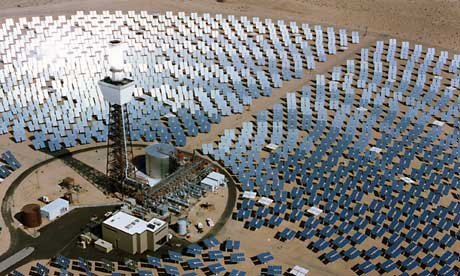
And there was something even crazier in store : Everyone who took this subscription, had to get Pehla's own set-top box (and junk the ones we had), and.. wait for it... A SATELLITE DISH. With every single connection. To make it easier, they made it zero installation charges and then zero cost for the dish completely. Now forget about the money aspect, just ask yourself this : There is ONE satellite of Pehla's out there in space that we need to receive the signals from. On the same building's terrace, keeping ONE satellite dish for all the subscribers would suffice - just as before, we can take the cord out and put it in splitters and wind them round and round and send them to all the building's residents, and even to the adjoining building if feasible. But NO, now every family that needed a connection, had to prop up their own satellite dish. So now a building housing 10 families would have 10 dishes on its terrace, with more for the families using more than one connection. The ensuing loss of space on the entire world's terraces where kids would normally go play or where mothers would grow plants or host parties - will go down in history as the biggest unaccounted-for forced real estate loss of all time. Forget the zero-installation charges, if we'd charged those bastards a monthly rent for occupying the building's terrace on a per sq. foot basis and added up charges for all residents in the buildings (as terraces are common space), it would have been them paying us! This model had absolutely no justification : the agents' reasonings that "if you split the wire you don't get all the signals properly" were bullshit. The only reason for forcing this ridiculous wastage of metals and plastic and installation efforts that I can see, is to drive prices up and hence drive profits up. If it's zero-installation-costs then that means they've passed the costs to your monthly subscription, which means they'll easily make up for those costs and still keep charging you long after making absolute profits.
And talking about profits : what the hell had they promised? reduced advertisements? bullshit! Now the TV channels firstly charge companies to air their ads, and then ON TOP OF THAT they charge millions of people for forcing them to watch those ads alongside their shows. The fact that this industry now makes billions and billions in profits proves that they're over-charging everybody. That too they didn't bring this about by making any real costly changes on their end : they simply re-programmed the signals that the satellite broadcasts, and changed the encoding from analog to digital, and put in encryption codes. So that on the ground, even if people still receive those signals, they don't get to see anything until they pay for the service, in lieu of which the agents puts in a decryption code - at first manually and now by inserting a card. Suddenly it's all high-tech but it's only for profit - the technology has been abused big-time. You heard that right. All the different packages that they offer - did you think the satellite way up there sends different signals to your dish and different signals to your neighbor who's taken the platinum pack? You're both receiving the same set of signals - but you get a different decryption code depending on what you're paying for and so you don't get some channels that your neighbor gets. It's all there, it's all coming to you, but by black-boxing the set-top box and encrypting the signals you get denied what once upon a time used to be as free as air.
But anyways, that is not what has caused the rise in terrorism, irrational as it may be. Now let me go into the main driver:
The real problem lay in the payment model. To be able to collect monthly or yearly subscription charges from families, the company in question needs to set up an expensive network of offices and agents everywhere they hope to reach. This can be done in cities and towns that have infrastructure set up to get daily supply of electricity, transport, frozen foods etc. But what about the places where the "grid" does not reach? And what about the majority of the population for whom paying for monthly TV viewing is beyond their family budget? The more out-of-reach a place, the higher the costs for the cable network, so higher charges, and so lesser people who can subscribe, as typically out-of-reach places are also poorer. Also, you need permissions from local and national administrations to carry out business. Which means a network will find it impossible to charge viewers for subscribing to an "enemy" country's channels. Basically, this model is simply non-doable for the majority of the population spread over all our continents - I'm talking 99.9% or more. But anyways that section, which had been benefiting the most from satellite TV by way of learning and liberalization, did not matter to the broadcasters because they didn't buy the advertised products. Dabur honey advertised in Indian channels wouldn't find customers in rural Pakistan. So they simply left them out. If you lived in a place where the network couldn't charge you a subscription fee, then no more satellite TV for you. Gone. I know this happened to my family - we considered Pehla too expensive and now I get how bewildered my Dad must have felt at the whole model and why he never signed up - it didn't make any sense. They took away a good thing from millions and millions of people from all over our side of the world because they couldn't make more money from us. It would not have cost them anything, but it would not have made them any huge profits so they simply abandoned over 99% of their audience.
What was left behind was a vacuum : TV had been the only real thing coming anywhere close to connecting millions of people with the rest of the world. All over Pakistan, millions of people would watch the same Indian TV shows and share in the steady unshackling of culture and the increasing empowerment of women and children. TV was teaching young people that sexuality wasn't a bad thing and that it is ok to fall in love with someone from another caste or religion. Peoples of both nations saw that the people on the other side were just like them. It sent a message of connectedness to the masses of both countries - you cannot expect the people of a nation that loves your weekly TV serials to really harbor ill will towards your nation's citizens. No matter what our leaders said, the people were not in the conflict mindset. Ditto for dramas in PTV that Indians adored. The authorities previously could do nothing to stop this shared culture. But with one Indian channel after another going digital and paid, now there was no way for them to have any subscription collection network in Pakistan - the authorities would never allow that. In the same way, Indian authorities too did not permit Pakistani and many other countries' TV channels. Now with a controlled system in place, restrictions came where there was previously free sharing of culture. So the sharing of TV and with that cultures across the border, stopped abruptly. Mind, at this time even Internet or even cheap telecommunications hadn't made any inroads into the majority of households of both nations. Suddenly we were cut off and the peoples of any nation could now only watch that which their authorities let them. As for the majority population - they were too poor to afford paid TV anyways - they lost out completely, they even got disconnected from the rest of their own nation.
It was in this vacuum that hardline organizations now found a space to thrive. Without a constant source of information and culture telling them that the "others" have emotions and feelings too, or informing them about how interconnected and united the world is or showing them all sorts of fascinating things from different peoples and places all around the world, it was easy for hardliners to brainwash naive minds into believing that only their way and their ideas were the right path and that everything and everybody else was a threat and had to be eliminated. Even the real experts of their own religion who preached peace, were now no longer seen or heard and were replaced by warmongers and misinformers.
And that, my friend, is where all the world's suicide bombers, terrorists, extremists and conflicters have come from. Can you really expect a muslim teenager to grow up to hate christians or hindus or anyone else if he's grown up watching how everybody has the same emotions and how interconnected our planet is or how amazing and beautiful our world and our universe is? In the nether regions of India too, zero connection with the rest of the country and the world made sure that when the locals were pushed out of their homes by greedy miners and industrialists, they perceived them as representing the entirety of the rest of India - to them modern India only represented greedy, vicious profit-crazy plunderers in bed with abusive, authoritarian police forces. Hence they simply did not have the environment or the encouragement to fight injustice in civilized discourse - how can you expect a tribal to know he can get justice at the courts if he doesn't know of their existence or how to go about the process? And so they took the only technology available to them without monthly subscription fees - weapons. And hence "India's biggest internal security threat" as Chidambaran likes to term it. How much have those channels made in profits, again? Is it more than the amount and the lives and livelihoods lost by us in internal and external conflicts till now? Do those profits justify depriving millions of poor people of the benefits of the world's accumulated ideas, knowledge, education and culture while they're getting state-of-the-art weapons delivered to them by arms manufacturers that our governments cannot stop? Does it justify the bomb blasts and the innocents killed?
So where do we go from here?
I can bet with you that if we were to un-encrpypt all of the world's satellite TV channels and make them free-to-air and viewable with the simplest of technology, we'll find peace quicker than any complicated rounds of negotiations or any wars on terror. If the US had bombed Afghanistan with free-to-air reruns of Friends and Baywatch and Tom and Jerry translated in all its local languages broadcast on all frequencies and parachute-dropped TVs, set-top boxes, satellite dishes and portable generators / batteries into the country instead of dropping bombs, the Taliban would have been converted or kicked out by their own women and children in a year. Phoebe of Friends is humanity's most powerful weapon of mass destruction of old thoughts and attitudes - she has single-handedly transformed the hearts and minds of millions of men and women and would transform billions of hearts and minds if only we unleashed her upon the oppressive and backward regions of the world. We do not need war - all we need is some love and entertainment along with elimination of this stupid encrpytion of TV channels!
Main point : Corporate greed in the television industry has created the present-day world problems of terrorism and religious extremism in the middle east and south asia. All the repeating terror attacks in both India and Pakistan, the rise of the Taliban in Afghanistan and now in Pakistan as well, Sri Lanka's ethnic conflicts, the Naxalite or Maoist violence in the interiors of India, Iraq's bloodbath of Sunnis Vs Shias as well as continued dominance of hardliners in Iran have been caused by a greedy business model that abused modern technology to line the pockets of a few individuals.
Sounds a little controversial? Let me rephrase it in a smaller line:
Paid Digital TV has caused all the religious/ethnic conflicts and terrorist strikes in our part of the world.
There, that should set some heads rolling. Now, I'll explain how:
disclaimer : I'm not saying that TV has caused all these problems - na, it's the opposite. I'm saying the that the conversion to paid digital of nearly all our channels has caused it.
I grew up as a son of an Indian expatriate engineer living in Saudi Arabia. It was a great childhood. TV was a huge part of all our lives. Back home in India, cable television too had mushroomed. In India, there were local cable networks bringing it home so you'd just stick an RF cable into your TV and have different channels tuned in. But in Saudi Arabia these networks weren't there. So, residents of a building or two would team up, buy and put up their own dish antenna's in the terraces of their buildings. In my building we had two dishes - a big one pointing in one direction and a smaller one pointing in the other. The cables coming out of there were simply joined together, and then split and dropped down the side of the building to all the residents' homes, and they went in via holes made in the air conditioner frames.
In our halls (why do we call it a living room, I lived in all the rooms) we had set-top boxes that took in these thick fat cables and tuned all the channels on different frequencies using several parameters - not just the one-dimensional LF/HF/UHF line of the TV. I remember there being different ways of tuning in audio and video. All the technicalities came right down to the end user and nothing was pre-programmed.
Although we thought nothing of it at the time, the hallmark here was practical simplicity : One dish antenna points at that particular satellite, and the wires coming out from that go down to our homes. No electricity used here. To add a new resident who'd recently moved in, we just put in a splitter or simply wound his wire round the existing ones. To get the channels right, we would simply dedicate an evening to taking the TV and the tuner up to the terrace, hooking it up there and physically moving the dish in all directions possible while looking at the screen to find the right orientation by trial and error. Many channels would come grainy but we did the best we could and lived with that.
I didn't even understand the concept at the time : all satellite TV channels we got were essentially free-to-air, analogue, non-encrypted. So, anybody anywhere in the world, could locally assemble a dish antenna, hook up wires coming out of it to universally available set-top boxes and watch all the satellite channels that we were watching. No patents, no brands. At the time it was understood that the channels cannot possibly take any money from the people watching, so to make ends meet and keep the cameras rolling they used advertisements. Nobody liked them very much, but we all understood they were a necessity to keep watching our favorite shows. It was a bit like putting up with a spouse's nagging so as to avail of the .. ahem.. later on.
At that time, we knew from our family friends living in American compounds (read: high-security gated communities in and around Riyadh made for foreigners where the usual strict rules of burkhas etc are relaxed and they're made to resemble a home away from home for the expatriates coming from western countries) that THEY were watching TV channels directly from USA/UK that weren't available to us. It was on a "Sky network" and apparently only paid or authorised people could get those channels and we couldn't even if we pointed our dishes in that satellite's direction and even if we tried those new digital set-top boxes out on the market. Apparently the american compounds paid for a connection. But still, all the residents there did not have a satellite dish above their homes. I later found out that this was basically the same rig used by cable operators in India to bring us all those channels that we did not get from our homegrown setups in Saudi. But even they didn't get ALL the channels due to government bans on some that regularly aired movies or shows having nudity. Still, there was a huge bunch of TV channels that anybody in this part of the world could watch with very little capital and only electric bills as the monthly expenditure. Essentially, TV was free.
What effect did that have, you may ask? Well, picture this : A small town in Afghanistan using generators could watch all the TV shows - Indian, American, European, Pakistani, Chinese, Japanese - everything - that everybody else was watching. Quite literally, the world's civilization was being beamed, for free, into the regions of the world where telephones, radio, internet, transport, frozen foods, malls, cars had no possibility of reaching. Eveybody loved Raymond. The Simpsons challenged everyone to understand english faster so they could get all the jokes. Everyone enjoyed Bollywood movies and songs even if their nearest theater would never show them. For all the authoritarian governments that banned cable TV on moral/cultural grounds, there was really no way of carrying out that ban : the day after a police raid the satellite dish would be up again - government orders melted away in the face of the iron will of the millions of women across the region who needed their weekly dose of serials. Kids across borders were united by Tom and Jerry and Captain Planet. MTV and Channel V and shows for teens like Friends challenged cultural notions on a daily basis in a fun, engaging and non-violent manner. Even the strictest of adults would secretly watch Baywatch after a day full of moaning the ills of western openness. The advertisements informed everyone about the latest state of technology so even if their local markets didn't have the products, they knew they're out there.
In the face of this continuous, non-stop barrage of the entire world's updated ideas, culture and technology, no hardliner stood any real chance of dominating the hearts and minds of anybody other than those closeted inside their own homes. How could anyone who's watched Phoebe of friends ever hate the liberalization of women? How could anyone who loves Tom and Jerry or Popeye ever even think of attacking the people of the country whence they came? How could anyone who's watching Star Trek be expected to blow up innocent people just because they're from another religion? How could anyone regularly watching Discovery shows on space exploration ever be expected to get really mired into regional conflicts?
Circa 2000 : Something happened. One by one all the channels started announcing they're switching to Digital with oh-so-improved viewer experience and that we should contact our cable operators to know how we can continue watching them. Now in a structured cable TV market, this was of little significance to the viewer. But in Saudi Arabia, and I'm sure, all over the non-cable-networked world, people went "what??" Because we WERE our own cable operators and we had no idea what these channels were talking about! Some channels like BBC who had never had any intentions of going paid, started giving detailed instructions on how to tune a standard digital set-top box. But the other channels didn't provide any details. One by one the channels go off air and are replaced by static screens telling that they've gone digital and giving phone numbers of their offices in places that most of the unorganized world could never reach.
And then some service called Pehla pops up in the middle east, catering to the desperate needs of the panicked expatriates from the subcontinent. Not only would we get all those channels back, but now we would also be able to see several more western channels, that too with schedules and info boxes right on screen, no need to consult the daily newspapers! The only catch : for the first time we now had to PAY a monthly or yearly subscription fee. For TV. Now it sounds perfectly fine to you, but back then it was like charging a monthly fee for breathing air. Something so ubiquitous that we never thought we'd have to pay for, whose running costs were nicely self-financed with all those advertisements, is now going to cost us monthly. In return we were promised "no ads" or reduced ads and very very high quality content. Of course, it was a useless sales pitch : with free-to-air TV channels gone, there were little other options.
And there was something even crazier in store : Everyone who took this subscription, had to get Pehla's own set-top box (and junk the ones we had), and.. wait for it... A SATELLITE DISH. With every single connection. To make it easier, they made it zero installation charges and then zero cost for the dish completely. Now forget about the money aspect, just ask yourself this : There is ONE satellite of Pehla's out there in space that we need to receive the signals from. On the same building's terrace, keeping ONE satellite dish for all the subscribers would suffice - just as before, we can take the cord out and put it in splitters and wind them round and round and send them to all the building's residents, and even to the adjoining building if feasible. But NO, now every family that needed a connection, had to prop up their own satellite dish. So now a building housing 10 families would have 10 dishes on its terrace, with more for the families using more than one connection. The ensuing loss of space on the entire world's terraces where kids would normally go play or where mothers would grow plants or host parties - will go down in history as the biggest unaccounted-for forced real estate loss of all time. Forget the zero-installation charges, if we'd charged those bastards a monthly rent for occupying the building's terrace on a per sq. foot basis and added up charges for all residents in the buildings (as terraces are common space), it would have been them paying us! This model had absolutely no justification : the agents' reasonings that "if you split the wire you don't get all the signals properly" were bullshit. The only reason for forcing this ridiculous wastage of metals and plastic and installation efforts that I can see, is to drive prices up and hence drive profits up. If it's zero-installation-costs then that means they've passed the costs to your monthly subscription, which means they'll easily make up for those costs and still keep charging you long after making absolute profits.
And talking about profits : what the hell had they promised? reduced advertisements? bullshit! Now the TV channels firstly charge companies to air their ads, and then ON TOP OF THAT they charge millions of people for forcing them to watch those ads alongside their shows. The fact that this industry now makes billions and billions in profits proves that they're over-charging everybody. That too they didn't bring this about by making any real costly changes on their end : they simply re-programmed the signals that the satellite broadcasts, and changed the encoding from analog to digital, and put in encryption codes. So that on the ground, even if people still receive those signals, they don't get to see anything until they pay for the service, in lieu of which the agents puts in a decryption code - at first manually and now by inserting a card. Suddenly it's all high-tech but it's only for profit - the technology has been abused big-time. You heard that right. All the different packages that they offer - did you think the satellite way up there sends different signals to your dish and different signals to your neighbor who's taken the platinum pack? You're both receiving the same set of signals - but you get a different decryption code depending on what you're paying for and so you don't get some channels that your neighbor gets. It's all there, it's all coming to you, but by black-boxing the set-top box and encrypting the signals you get denied what once upon a time used to be as free as air.
But anyways, that is not what has caused the rise in terrorism, irrational as it may be. Now let me go into the main driver:
The real problem lay in the payment model. To be able to collect monthly or yearly subscription charges from families, the company in question needs to set up an expensive network of offices and agents everywhere they hope to reach. This can be done in cities and towns that have infrastructure set up to get daily supply of electricity, transport, frozen foods etc. But what about the places where the "grid" does not reach? And what about the majority of the population for whom paying for monthly TV viewing is beyond their family budget? The more out-of-reach a place, the higher the costs for the cable network, so higher charges, and so lesser people who can subscribe, as typically out-of-reach places are also poorer. Also, you need permissions from local and national administrations to carry out business. Which means a network will find it impossible to charge viewers for subscribing to an "enemy" country's channels. Basically, this model is simply non-doable for the majority of the population spread over all our continents - I'm talking 99.9% or more. But anyways that section, which had been benefiting the most from satellite TV by way of learning and liberalization, did not matter to the broadcasters because they didn't buy the advertised products. Dabur honey advertised in Indian channels wouldn't find customers in rural Pakistan. So they simply left them out. If you lived in a place where the network couldn't charge you a subscription fee, then no more satellite TV for you. Gone. I know this happened to my family - we considered Pehla too expensive and now I get how bewildered my Dad must have felt at the whole model and why he never signed up - it didn't make any sense. They took away a good thing from millions and millions of people from all over our side of the world because they couldn't make more money from us. It would not have cost them anything, but it would not have made them any huge profits so they simply abandoned over 99% of their audience.
What was left behind was a vacuum : TV had been the only real thing coming anywhere close to connecting millions of people with the rest of the world. All over Pakistan, millions of people would watch the same Indian TV shows and share in the steady unshackling of culture and the increasing empowerment of women and children. TV was teaching young people that sexuality wasn't a bad thing and that it is ok to fall in love with someone from another caste or religion. Peoples of both nations saw that the people on the other side were just like them. It sent a message of connectedness to the masses of both countries - you cannot expect the people of a nation that loves your weekly TV serials to really harbor ill will towards your nation's citizens. No matter what our leaders said, the people were not in the conflict mindset. Ditto for dramas in PTV that Indians adored. The authorities previously could do nothing to stop this shared culture. But with one Indian channel after another going digital and paid, now there was no way for them to have any subscription collection network in Pakistan - the authorities would never allow that. In the same way, Indian authorities too did not permit Pakistani and many other countries' TV channels. Now with a controlled system in place, restrictions came where there was previously free sharing of culture. So the sharing of TV and with that cultures across the border, stopped abruptly. Mind, at this time even Internet or even cheap telecommunications hadn't made any inroads into the majority of households of both nations. Suddenly we were cut off and the peoples of any nation could now only watch that which their authorities let them. As for the majority population - they were too poor to afford paid TV anyways - they lost out completely, they even got disconnected from the rest of their own nation.
It was in this vacuum that hardline organizations now found a space to thrive. Without a constant source of information and culture telling them that the "others" have emotions and feelings too, or informing them about how interconnected and united the world is or showing them all sorts of fascinating things from different peoples and places all around the world, it was easy for hardliners to brainwash naive minds into believing that only their way and their ideas were the right path and that everything and everybody else was a threat and had to be eliminated. Even the real experts of their own religion who preached peace, were now no longer seen or heard and were replaced by warmongers and misinformers.
And that, my friend, is where all the world's suicide bombers, terrorists, extremists and conflicters have come from. Can you really expect a muslim teenager to grow up to hate christians or hindus or anyone else if he's grown up watching how everybody has the same emotions and how interconnected our planet is or how amazing and beautiful our world and our universe is? In the nether regions of India too, zero connection with the rest of the country and the world made sure that when the locals were pushed out of their homes by greedy miners and industrialists, they perceived them as representing the entirety of the rest of India - to them modern India only represented greedy, vicious profit-crazy plunderers in bed with abusive, authoritarian police forces. Hence they simply did not have the environment or the encouragement to fight injustice in civilized discourse - how can you expect a tribal to know he can get justice at the courts if he doesn't know of their existence or how to go about the process? And so they took the only technology available to them without monthly subscription fees - weapons. And hence "India's biggest internal security threat" as Chidambaran likes to term it. How much have those channels made in profits, again? Is it more than the amount and the lives and livelihoods lost by us in internal and external conflicts till now? Do those profits justify depriving millions of poor people of the benefits of the world's accumulated ideas, knowledge, education and culture while they're getting state-of-the-art weapons delivered to them by arms manufacturers that our governments cannot stop? Does it justify the bomb blasts and the innocents killed?
So where do we go from here?
I can bet with you that if we were to un-encrpypt all of the world's satellite TV channels and make them free-to-air and viewable with the simplest of technology, we'll find peace quicker than any complicated rounds of negotiations or any wars on terror. If the US had bombed Afghanistan with free-to-air reruns of Friends and Baywatch and Tom and Jerry translated in all its local languages broadcast on all frequencies and parachute-dropped TVs, set-top boxes, satellite dishes and portable generators / batteries into the country instead of dropping bombs, the Taliban would have been converted or kicked out by their own women and children in a year. Phoebe of Friends is humanity's most powerful weapon of mass destruction of old thoughts and attitudes - she has single-handedly transformed the hearts and minds of millions of men and women and would transform billions of hearts and minds if only we unleashed her upon the oppressive and backward regions of the world. We do not need war - all we need is some love and entertainment along with elimination of this stupid encrpytion of TV channels!