Hi! This blog is testament to the fact that the voices in my head are truly out of my control! Rather than going crazy about it, i've decided to channel them constructively!
Sunday, October 25, 2015
Tribute: Bhaskar Save, the Gandhi of Natural Farming
Tuesday, March 10, 2015
Report from Vikalp Sangam, Madurai, Tamil Nadu, held in Feb 2015
Thursday, September 11, 2014
Vermicompost project in slum area creates earnings for residents while taking care of organic waste
Members of the community groups underwent training and initiated a small-scale trial project investing Rs.2,200 (£29) they had raised from the sanitation blocks. They bought 4,000 red worms, Eisenia foetida, commonly known as the red wiggler or manure worm, which are best suited to composting.
Encouraged by the initial results the community then set up a larger scheme. An area of land by the communal toilet blocks was set aside with a small shed and composting arrangements for the worms.
Now in every 45 day cycle, for an investment of Rs.500, nearly one tonne of compost is produced. The compost is packed in bags and sold for Rs.5 per kilogramme, making nearly Rs.3000 per cycle.
The success has spread to other slum communities and individual households, which are now also carrying out vermiculture projects. The original project now even breeds and sells worms to those wishing to follow its example.
Saturday, February 15, 2014
GM technology has not been able to increase crop yields anywhere
Even in India, the Central Institute for Cotton Research (CICR) Nagpur, which monitors the cotton crop, has admitted: "No significant yield advantage has been observed between 2004-2011, when the area under Bt cotton increased from 5.4 to 96 per cent." Thus, the argument that the world needs to produce more for the growing population by the year 2050, and therefore it needs GM crops, does not hold true. "
Economics of Happiness Conference, Bangalore, 15 March 2014
http://www.theeconomicsofhappiness.org/conference-2014-india
Localisation : The most strategic way to tackle our escalating social and ecological crises?
Over the past 30 years, giant banks and corporations have become wealthier and more powerful than ever before. This has happened because governments, in the name of 'economic growth', have supported ever-increased global trade while neglecting local business potential. Through a series of 'free trade' treaties, trade and financial deregulation continues today, weakening and impoverishing governments and whole countries. This is the essence of economic globalisation.
Despite the rhetoric of inevitability that supports it, globalisation is a process of planned change — the consequence of government policies that support the profit-driven agendas of big businesses and banks. These policies include the building up of transport, communications and educational infrastructures tailored to the needs of global corporations; the over-regulation of local and national businesses; and the use of misleading indicators like GDP.
Since globalisation is at the root of so many problems, localisation — a shift away from the global and towards the local — is an obvious part of the solution.
The central principles of localisation
• Localisation is the diversification and decentralisation of economic activity. • Localisation strengthens human-scale business — especially for basic needs such as food, water, and energy, but also in housing, banking and healthcare.
• Localisation relies more on human labour and skill and depends less on energy and technology.
• Localisation requires less transportation, less packaging, and less processing, thereby reducing waste, pollution and fossil fuel use.
• Localisation adapts economic activity to the diversity of ecosystems, restoring cultural and biological diversity.
• Localisation fosters a deeper connection between people and nature.
• Localisation rebuilds social interdependence and cohesion, providing a more secure sense of identity and belonging, which in turn is a prerequisite for peaceful coexistence.
• Localisation challenges conventional notions of international development, instead reclaiming and regenerating diverse knowledge systems, languages, aesthetics and wisdom traditions.
Global to local policy changes:
¥ The renegotiation of international trade treaties, this time putting local needs first. This means the re-regulation of global trade and finance, along with the relaxation of regulations that currently stifle local trade and finance.
¥ A shift in taxes and subsidies that currently favor the large and multinational. Rather than tax labour while subsidising the use of energy and technology, policies need to promote the creation of jobs and livelihoods while minimising the wasteful use of energy and other resources.
¥ A re-direction of public investments in infrastructure. Billions are still being invested in creating and improving trade-based infrastructures — superhighways, shipping terminals, airports — while the needs of local economies are being neglected.
¥ Government control and regulation of the creation of money and debt. Leaving these key elements of modern economies in the hands of unaccountable banks and financial institutions has led to reckless speculation and economic collapse, as well as a widening gap between rich and poor.
***At the grassroots, a powerful localisation movement is emerging worldwide. India itself has a rich history of innovation and activism. Here and elsewhere, the localisation movement is showing that strengthening community and the local economy can undo many of the problems created by the mad rush towards globalisation.
Central to this new thinking has been the local food movement, which is already demonstrating that shortening the distance between farmers and consumers creates a multitude of benefits, including: healthier and fresher food; more income for farmers; more agricultural and biological diversity; and less pollution and fossil fuel use. Perhaps most importantly, small, diversified and locally-adapted farms actually produce more food per acre than large industrial monocultures, while reclaiming the food supply from multinational corporations.
The same logic that underlies the local food movement applies not only to other aspects of primary production (for example, fisheries and forestry), but to other quite different areas of economic life. Amongt the countless initiatives already underway are:
Via Campesina Transition Towns Decentralized renewable energy Local business alliances Local banking Alternative currencies and local bartering Local stock markets 'Gift economies' Ecovillages School gardens Non-school education Eco-building Biodiversity economics 'Counter-development' Anti-Corruption Inner Transformation
We believe that these and many other initiatives like them can gain strength by forging alliances under the localisation banner. Together, we can build a movement that will challenge the might of the mega-corporations and bring the economy back home.
We invite you to join us!
http://www.theeconomicsofhappiness.org/conference-2014-india
Thursday, February 13, 2014
Who the country's real looters are
The politicians are their agents... they may get a 5% cut.. but who's
running off with the remaining 95%??
They provide jobs to 1 lakh people only after throwing 10+ lakh people
out of their homelands and centuries-old livelihoods.
They occupy 1000s of hectares of public land for practically free, get
lakhs of crores worth of tax benefits and subsidies, do not have to
spend anything on international standards of pollution control and
safety, and then boast of how they are 'competitive' and give high
paying jobs to Indians (by passing on some of the loot gotten through
govt intervention).
They rip off Rs.1000cr and then put Rs.1cr in CSR and make a huge show
of it. They're hiring most of the social work graduates through their
foundations and keeping them busy in solving symptom problems while
preventing anyone from digging too deep.
Even while boasting of giving jobs, automation is constantly on (our
textbook chapters on India having labour-intensive industry and hiring
more ppl are irrelevant now; technology has caught up) and the
ABSOLUTE NUMBER of jobs in many private sectors has DECREASED in last
10 yrs, esp in mining which is being pushed so heavily even overriding
environmental no-go's.
They talk eloquently about ordinary Indians spitting on roads, while
secretly spitting billions of liters of toxic pollutants into our
countryside.
They have wrecked our rivers and lakes, wiped out our forests,
polluted our air, depleted and poisoned our groundwater.
If local people being harmed by them stand up to defend their
motherland, these companies are the ones ordering the media and govt
to brand them as naxalites, terrorists. Our own defense forces, whose
job was to protect the country from foreign invasion, are being used
like private merceneries to murder our own citizens who are standing
up in self defense. (why else do you think there are increasing cases
of suicide, depression and fratricide among these forces? They're
realizing they're being ordered to kill their own people)
They own the mainstream media and have used it to paint themselves as
good, disciplined, reputed, honorable and needed for the country's
'growth', without explaining exactly what we're supposed to grow into.
(Picture a desert spanning across the country and 1 billion dead
people : that's what we're growing into.)
They are the real foreign hand, the shadow dictators of our nation.
White skin or brown skin, it's the attitude to grab and control
everything, to take and take as much as possible, which matters. We
don't need them at all; it's a big fat lie we're being brainwashed
with.
What you can do : For starters, stop believing whatever the mainstream
media portrays, particularly watch out for them imposing their
opinions on you.
Find out who their owners are; you'll be shocked to find out.
Talk to people on the ground, visit the countryside, spend your spare
time on thinking and discussing rather than watching TV.
Look for independent news sources, particularly orgs that have
transparent funding and are reader-funded. Invest in these independent
news sources.
Find out which banks are using citizens' savings to lend to these
corporates, and don't keep your money with them (that will be
difficult as these guys will be the ones giving highest interest rate.
That's because they're giving you a cut of the loot of your own
country).
Tuesday, October 30, 2012
What really causes cancer?
In this talk, Mina demonstrates how it was the environment around the cells (the Extra-Cellular-Matrix or ECM) that caused them to go malignant and start tumours. By placing the tumorous cells in better, calmer, more nurturing environments, the cells started behaving normally again and the cancer receded!
Skip to 9 mins 50 secs in the video to jump to the most revelatory part.
With this she's delivered a deadly blow to the "cancer gene" argument. If we really had cancer-causing genes, why does tumour only happen at one place?
It took me back to the Nature Vs Nurture explanation in ZMF. Lock a child in a classroom all day, restrict and monitor her every move, have someone else decide what's good for them and what's not, rule with an iron fist, and voila, you'll get agitated, violent children. Then find one gene that happens to be common among them, and voila, the "violent gene" has been found! Bullshit. Context matters.
Edit : This video on Cancer's forbidden cures blew my mind : So much has been deliberately hidden from the people by the pharmaceutical industry! This is criminal.
At the same time, this give a big leg-up to the traditional, herbal cures schools for healing cancer.
https://www.youtube.com/watch?v=gWLrfNJICeM
Thursday, October 18, 2012
Transcript of Many Securities talk by P Sainath
http://www.youtube.com/watch?v=0BoRLwoEe18
I found this talk revelatory and eye-opening. I couldn't find the transcript of it anywhere, so I wrote it myself. (mind, it took a very long time, phew!)
This needs to be shared. And internalised. It covers a lot of topics and shows exceptional insight into the reasons behind and the consequences of the distorted way in which India the State treats its citizenry.
Monday, July 9, 2012
Poem: Thoughts from a secular humanist
Thoughts from a secular humanist
I have no invisible authority
I am not mentally enslaved,
I am not an unworthy sinner
Who is waiting to be saved.
My actions are my own
Responsibility for which I take,
Credit for the good and penalty for the bad
The payment for my deeds only I can make.
I'm not the innocent, confused child
'Humble' messengers try to find,
I'm a skeptic with adult reasoning
Who has left Faith behind.
The answers gifted by logic and reason
Are far more appealing to me,
I keep searching for the still unknown
No fitting baseless assumptions dishonestly.
Morality for me is not dreived from an ancient book
With tiring tales of brutality and occasional verses of love,
To be good and to care for my fellow beings
I don't need promises of gifts from above.
The knowledge and wisdom accumulated by science
Sincere and provable, without disguise,
Is what I find more comforting and reality revealing
Than ones given by power-hungry cults fighting over lies.
I'm not someone who thinks women
Compared to their men, are any less,
When her right to say 'No' is violated
I don't blame it on her dress.
Her body is her own, her character not just her face
Rather than a world of fear and suppression,
They deserve a better place.
Things that others do without harming anyone or you
Are reason enough to make some disgusted or depressed
But when I come to know he loves another 'he',
I find myself hardly distressed.
It is better to judge people based on their actions
Not for 'what' they are,
Whether your genes played well or decided to change the rules
All of us are equal humans, who've managed to come this far.
I don't believe that the Universe was 'designed'
With a specific purpose, keeping and of us in mind,
A creator-free Universe is not uninteresting or colourless
But a lot more spectacular with added wonders to find.
Meaning is what we derive from the things that we strive
To achieve during our brief stay on this dot,
Knowing that none is bestowed with any special privileges
How many less battles would have been fought.
My love for this world and concern for its inhabitants
Is not restricted by any boundary line,
Whether you're from the West and I'm from the East
We're still on the same beautiful planet
So ought we not to get along fine?
I respect your right to believe what you want
I respect your right to choose,
But at times when what you believe and choose has a bearing on me
Don't expect me to keep shut or not refuse.
As you read these words, if you find yourself offended
And feel that you need to complain,
I hope you'll first pause for a second and try not to forget
How not being allowed to say it had once led our species
Into the Dark Ages of suffering and pain.
Disclaimer: I didn't write this, but I love it! If you know the author, please connect us!
Saturday, July 7, 2012
Illness, modern medicine, and my mom
After she passed away at the bitter end of a 3-year long battle with ovarian cancer, at one point I came across studies that showed that all the various painkillers and drugs she'd had to take regularly, in addition to the coffee she was addicted to, had carcinogenic material in them and contributed to a cancer risk if consumed regularly. Plus the fact that chemotherapy practically destroys the body's defenses and sets up the patient for even faster degeneration should a cancerous tumour return (which in my mom's case, it did, with a vengeance).
I can't really express how much that hurt, knowing that what we had accepted to heal her ended up killing her at the age of 51, that too in a way I wouldn't recommend even for an enemy. Dying is one thing, but to see the most important person in your life get slowly and utterly decimated, to see her essence as a human being get taken away... no one should have to go through that.
Since then I've pretty much lost faith in conventional medicine, do my best to avoid taking any pills. For now, if I ever come at a phase where I have to choose between a natural death and chemotherapy, I'll choose death. Homeopathy rocks too, but I prefer ways which don't involve putting stuff into my body. Instead I've found its better to embrace and go through whatever lows come - the feeling of wellness when we get out on the other side is really awesome.
Over the past 3 years I've been through a couple of bouts of severe illness and prolonged depression and found myself recovering much better if I let it take its time. illnesses were resolved by merely fasting and giving the body's digestive system a break. Once a bout of high fever that had lasted 3 days escalated to a point where I was literally knocked out, and after a brief second of unconsciousness (I actually thought this was it and I'm going to die!), all my sweat glands opened up like a dam had just broken and my body immediately stabilized and in a few hours I was walking and driving as if nothing had happened!
Edit: If you intake addictive substances on a daily basis, like smoking, alcohol, drugs, coffee, tea, soft drinks etc then the above paragraph has no meaning for you. I'm free of all of that and that's how natural methods worked for me. They're not going to work for you so don't risk it.
Depression... that's a tougher cookie, but I've found that by immersing myself into the lives of others, by doing everything I can to help another human being, by literally living for the sake of others, I've been happier, healthier, more creative and successful in spite of the depression. There are tragedies in all our lives and it's silly and kind of insensitive to wish we could erase them (I cherish even those worst experiences as they've taught me how to be more human) - we just have to learn to multi-task, have a broadband connection inside our head and live our lives fully at the same time.
At the same time, always keep in mind that there are others with much worse problems than yours and if they can deal with it then so can you. Finding a role model like that and keeping on referencing to them works wonders. Oh, and crying your heart out like a baby HELPS like anything - it's nature's very own anti-depressant, let it happen, people! (advice to men especially!)
And what if we just don't have the time or space to take a day off and let ourselves heal naturally? Well, I left that kind of lifestyle behind a long time ago. Take the time, chill out / blow out! One day of down-time today will give you several years in return later. You only get one life. 500 years from now no one's going to bother whether you met all your deadlines or not, whether you met all of "society's expectations" or not. But if you live fully and allow yourself to do something amazing - there's your chance for immortality!
Thursday, November 3, 2011
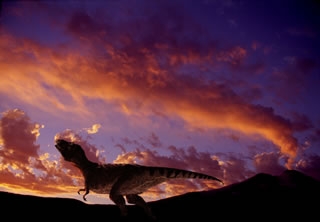
No more dead dinosaurs, sorry!
Ok enough talk and theories. Time to put the foot to the pedal.
| www.abdn.ac.uk |
Petrol prices are never coming back down, people. Even if we removed all the taxes and the surcharges that these email fwds complain about, there IS NOT ENOUGH PETROLEUM IN THE WORLD FOR INDIA's demand or for any other country - there were only that many dead dinosaurs in the ground and we've burned most of them off.
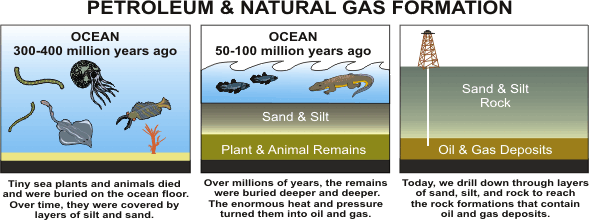
(for the slow : That is correct. Petrol that powers your cars and bikes is actually extracted from the decomposed dead bodies of dinosaurs and other animals and plants that lived and died millions of years ago. In case you did not know that little yucky detail. That is why it is called a Fossil Fuel. Did you think it was coming from your oily neighbor's head??)
There were no infinite generations of dinosaurs. They died out, I'm sorry. There is no infinite petroleum. All the money in the world will not make any more of it for you. If you'd like to start now, there is a 65~100 million year waiting period. Just consider yourself lucky that the animals who died at the time were buried rather than cremated upon death.
The age of petrol is over. Transition or suffer.
(edit: ok, for the sake of accuracy, petrol is more from dead sea creatures than dinosaurs, statistically speaking. But the dinosaur tag sends the message home. See the image below for a quick explanation)
| www.ei.lehigh.edu |
Wednesday, April 13, 2011
How India can defeat inflation and rising food prices
Peak Oil? Urban Farms? Cuba's Been There, Done It
http://thetyee.ca/News/2009/08/27/CubasDoneIt/
And then watch this video, shot on a terrace in Mumbai, to see how we can convert Indian cities into self-sufficient food producers and DEFEAT inflation and rising prices!
http://www.youtube.com/watch?v=pJImcRYB_kU
Want to know more about how transformative self-help and organic living and farming can be? Take a look at the Lapodia Model, where just like Anna Hazare did, Laxman Singh from Lapodia village, Rajasthan gives a brilliant and refreshing talk on how they turned his defunct village into a model village :
http://www.youtube.com/watch?v=Z3pRQk7bexs
Quoted from the article on top:
The plots were well-tended and bursting with food, there were shady spots to sit in, and none of the workers seemed too hard-pressed to stop what they were doing for a chat. One elderly farmer with a machete noticed how parched I was in the Caribbean sun and sliced me a delicious fresh coconut to drink. If this is the future of city food growing, I thought, bring it on.
"The world needs urban agriculture," Salcines said to put things in perspective.
Of course, it's not like we have much of a choice : http://en.wikinews.org/wiki/Poverty_rises_as_food_prices_increase
Friday, April 1, 2011
Video: Lapodia Model : not just organic farming; organic living!
This model can show the way towards the organic farming revolution that can cut out our over-dependence on petroleum-based fertilizers pesticides etc, reduce prices, increase corp yields, eliminate flood risks, and make our country healthy again! Bring it on, Lapodia!
Info: Laxman Singh from Lapodia village giving a brilliant and refreshing talk on how they turned his defunct village into a model village thanks to organic farming and sustainable community development.
Language : Hindi
Video shot during Renaissance 2011, a 3-day social entrepreneurship fest held at BITS Pilani
http://en.wikipedia.org/wiki/Renaissance_India
Saturday, October 9, 2010
Cleanup Drive of Sahakarnagar-2 playground on 10/10/10
A Cleanup drive of the sahakarnagar-2 playground near our place! (Pune-411009)
Please follow this facebook event invite if you are interested:
http://www.facebook.com/event.php?eid=101780419889791
The Sahakarnagar-2 Playground is the hub of all outdoor sports activities in the area and is famous among local cricket and football players. But recently it's gotten littered all over with pieces of paper and plastic.
We, the citizens in the locality and nearby and hopefully all players who will be there at the time, are going to clean it up! We have spread the word among shops in the locality and distributed a few flyers (but can't spread many, that would be paper wastage). Tomorrow I'll be doing a door-to-door among the buildings surrounding the ground in the morning. Hopefully we'll be able to get the kids in the area involved!
So if you're interested, do join us at 4.30 pm at the bikes-parking opp. Swati Apts adjoining the ground for briefing, and team formation. The whole cleanup ought to take less than half an hour if there are enough people gathered!
http://maps.google.co.in/maps/ms?source=s_q&hl=en&geocode=&num=10&ie=UTF8&msa=0&msid=109508170904478586290.00049227c40e0eb525c6d&ll=18.490522,73.848601&spn=0.003149,0.004308&z=18
Please SMS me on 966-583-1250 if you're interested, or call if any enquiries or if you can help.
I'd like to know where we can buy bio-degradable waste bags.
Also pls forward this to friends who might be interested.
Sunday, September 5, 2010
Story of a person living without money
Dear all,
Recently I read about a person called Mark Boyle. He has published a book named The Moneyless Man- A Year of Freeconomic Living. This person lives in Briton, in a place called Bath. This man grows his own food, so he does not have to spend money shopping, uses a mixture of cuttlefish and fennel seeds for toothpaste, and prepares washing detergent by boiling foraged soap nuts. He powers his laptop by solar power and has a hole in the ground for a toilet. He occasionally rummages through supermarket bins. According to him, you can find anything you want in super market bin and it is symbolic of the world we live in.
Mark was once a student of economics and now he lives a life in a caravan, as he saw Mahatma Gandhi’s film in the fourth year of his studies, which left a deep impact on him. So he began to read as much as possible about this Indian leader and his principles and quotes influenced him greatly, especially the quote, be the change you want to see in the world. After completing his studies, Mark worked for Organic food industry, but he realized that the industry suffered from the same problems of excessive packaging, uses a lot of plastic, massive food miles and big businesses buying small one. He also realized that money disconnects people from what they are consuming and till the degrees of separation between consumer and consumed is decreased, nothing would change. Boyle has been living TV free too, as he realized that TV wastes a lot of man hours. (Recently when I was in India, I was talking to a young girl about her T-Shirt and I just mentioned that the work on it is beautiful, whoever has done it, must have spent a lot of time, she immediately told me that he was paid for it, without realizing that the person has really put in a great effort.) Boyle is saying in his book that he wants to reduce administrative work and want more people to work in primary industries such as farming. Recently he hosted a party for 700 people and 90% of the things came from supermarket bin. He found 700 jars of chocolate spread, which costs 2000 British pounds, but just because it had expired, they were thrown out. But no one understands that it would have not gone bad till 2020 because of its sugar content. He has found out from official sources that an average American throws 40% of his food in the bin, where as in Britain, it is 35% and he feels that when millions of people don’t get one square meal, wasting so much food is criminal. He says that as recycling was not a good word ten years ago, food wasting should also be seen in the same way, it has to be a cultural change more than the law changing it. He has published this book and whatever money he gets from selling this book, he will buy a land, where he will train people on how to live without money to live sustainably. After that, he will build a project for charity.
I really liked the idea. I don’t know how much we can implement it, but it is always good to see the other side of the coin. Let me finish this mail here. Hope all of you are fine there.
Regards
Rima
I found more info on this article: http://dontgiveupworld.com/short-essays/the-moneyless-man-how-did-mark-boyle-spend-a-year-without-spending-a-dollar-submtd-by-sandeep-rajbhushan/
In the narrative, Boyle talked about getting so many of his things for free on freecycle. Well, if he can, then so can we!
Here is the Freecycle group in Pune: http://groups.yahoo.com/group/Freecycle-Pune/
Here's another nice site mentioned: http://www.justfortheloveofit.org - use this to share skills in your community for free.
Sunday, August 29, 2010
Random Ideas : How did the critter cross the road?
The survival of many species in particular areas depends on their ability to move across the territory. When a road cuts through a place, animals like squirrels, snakes, insects, etc are put into immense danger. In the article I read, it talked about how many snake species in the western ghats in India are being threatened because they get killed regularly by vehicles while crossing roads. Poor things can't even be seen by the incoming cars and trucks, and you can't really blame them for being so short that they can't see the fast incoming vehicles in time to dodge them.
Maybe making small drains / tunnels below the roads at various points could help. Just a simple pipe that's put across the road, before laying it on. And the ground around those places could be leveled in such a way as to channel the critters to the pipes. Such channels below the road are probably used at places for handling rainwater flowing downhill. But we probably need to enlarge them to accommodate the animals as well.
Saturday, August 21, 2010
Social Entrepreneurship : Why the government is best when not interfering
http://aartishrivastava.wordpress.com/2010/08/05/social-entrepreneurship-in-india

The part at the end about the Indian Government helping by not doing anything to stop - is actually very good news.
To expect governments to take care of each and every aspect of society is to put the powers of a God in the hands of fallible humans. We know how that venture has ended. The profit-centered capitalist system then went on to put those powers into private individuals' hands, and even that model seems to be collapsing.
The best bet, in my opinion, is to allow the people to help themselves.
I have observed that we have big heartless profiteering that harms the BOP - Bottom of the Pyramid, only in places where there is some or the other regulation, licenses, rebates, sops or other such artificial barriers or stimuluses. However noble the intentions may be, the top-down model seems to screw up something or the other everywhere.
Maybe not taking sides, maybe letting go and giving true freedom - Swarajya - is what we need to do.
I can see social entrepreneurship expanding into evermore sectors in the coming years. Hope I can be part of this wave as well.
Related stuff:
http://www.youtube.com/watch?v=A6a9549ZeqQ - American constitutionalist Ron Paul explaining the easy pitfalls of pretending that government should be taking care of this and that part of day to day life, and clearly, factually, explaining why minimal government is the best bet.
http://www.youtube.com/watch?v=2z9Pe2y0GBE - My speech titled "Let Go" (now I'm just bragging!)
Monday, June 14, 2010
Brute strentgh Vs Flexibility
So he built a house - broad, flat, with lots of room and off limits to all but Him and his family. It was better, more luxurious, easier to get into and out of.
He built them across the Earth, got used to thinking that this was the only possible way of living. The tree became a disdainful thing, probably just good for oxygen making but to heck with any other uses - he had his House for protection!
Then the rains came a little too much, the rivers jumped the banks and flooded His streets and cities and inundated His house, pillaged everything. In some places His house was washed away, in others destroyed. Then came an earthquake and his Oh-so-strong house crumbled under its own brittleness. Then came the tsunami and in one fell swoop cleared the shore. Then came the hurricane and the tornado and hit his House's walls at an angle they couldn't withstand, lifted His roof of and pillaged his oh-so-strong House again.
While he was rummaging through the debris and wading through the floodwaters, he saw the rough, slender trunk of the tree - it was still there. Up top, the branches and the leaves were still there. Some were lost, but most were still there. He didn't take any time to think, shrugged and moved on.
And then the tree thought to itself : "What an idiot. Everyone knows that the key to survival is not brute strength, but flexibility."
Saturday, June 12, 2010
BP Oil ERUPTION case in 20 points
chalo, let me cut this very very short:
Friend: ya ya
Nikhil: 1. A methane bubble blows up the DeepWater Horizon oil rig incinerating 11 workers.
Friend: :O
Nikhil: 2. The accident leaves the pipe open at the bottom of the ocean floor, 1000s of feet below sea level.
3. BP gives all placatory and "we are in control" statements which are 100% false, later exposed by actual photographs
Friday, October 2, 2009
11th hour for the fossil fuel dinosaurs, and we're buying them up!
This is a conundrum : Higher demand, and cheaper cars??
There's got to be something we're not seeing. Well, at least something You're not seeing.
Electric cars are here. So are hybrids. Tesla Motors, Nissan, Toyota, even GM and all the Chinese makers are going into it big-time.
It's not just about economics. Look at your environment. The developed countries are smarter than you are, and they've started planning already, while you run around gaping at those ads.
All automakers are trying to dump as much petrol and diesel vehicles in India, Asia, Africa etc as they can, coz in a year they won't be able to sell their pollutant shit anywhere, with electric and hybrid coming in the thousands and revolutionizing the auto sector.
Gift Economy
Contribute
(PS: there's no ads or revenue sources of any kind on this blog)