Bitcoin's fall / flaws being predicted on Dec 5 2013 :
http://stormcloudsgathering.com/bitcoin-what-youre-not-being-told
And it crashes on 10th February 2014 :
http://scgnews.com/bitcoin-flash-crash-80-drop-in-seconds-down-20-after-stabilizing
These guys know their stuff, they called it, and it happened. So now I
would advise the reader to pay attention to the other things they've
been writing / videoing about: http://stormcloudsgathering.com
I think this also brings out a deeper message, and these happenings
are reinforcing it for me.
Bitcoin came about as a result of a hunt for an alternative currency.
But the way of transacting : the buying and selling of materials and
services in an environment of conditionality and selfishness that
we've taken for granted to be the only way things can get done... that
was kept the same. The core was the same, it wasn't rethought.
So Bitcoin was a substitute. Not an alternative.
I don't think that's going to cut it. This is kind of like seeing
there's some problem in education, and substituting the existing
teachers with higher quality replacements, and expecting that that
will solve the problem. That doesn't solve the problem, because we
didn't change the system itself. The education will fail the students
regardless of what substitute teacher we bring in; similary, the
substitute currencies will fail.
The people who went in for Bitcoin, and wanted a decentralized
currency, I don't think they're recognizing that centralizing is an
inevitable consequence and a requirement for the system of
transactions where there's conditionality and selfishness involved.
What we need here is an alternative to that system of transacting. An
alternative that doesn't have conditionality and selfishness inherent
in it. We have to keep in mind that even barter, commonly mistaken to
be the only original mode of transaction, also has conditionality and
selfishness inherent in it. And that's why I hear the cliche, "So
you're saying we should just go back to barter??" The assumption here
is that barter was the origin and we all came from it, hence "go back
to". The brain shuts down there, and no consideration is given to
thinking how families, extended families, indigenous communities, and
even ecosystems and communities in the animal/plant world operate
every day.
I do have a solution in mind and at heart, but I don't think I can do
justice to it in writing it here... I can feel it but would need more
time and space to write it. But there are some wonderful resources I'd
like to point you to. The real alternatives, which do not have
conditionality and selfishness inherent in them, have different names
but common core values. The names go by "Gift Economy", "Giftivism"
etc.
http://charleseisenstein.net/
http://www.servicespace.org/
http://moneyandlifemovie.com/
Thursday, February 13, 2014


5 deaths in major banking institutions in last 2 weeks
It's surprising how these deaths are being declared as suicides or accidental deaths just hours or a day or so after
the actual event... is there no real investigation happening?? Why am I not seeing a single statement like "the police are investigating"?
And don't be too vindictive by saying "5 less criminals" etc... it's a lot more probable that these were the Edward Snowdens / Chelsea Mannings of the financial sector and they got stopped before they could whistle-blow, plus their deaths will send a chilling effects down the ranks to prevent anyone else from going public with what they know.
JP Morgan Executive Becomes 5th Banker to Die in Last 2 Week
And don't be too vindictive by saying "5 less criminals" etc... it's a lot more probable that these were the Edward Snowdens / Chelsea Mannings of the financial sector and they got stopped before they could whistle-blow, plus their deaths will send a chilling effects down the ranks to prevent anyone else from going public with what they know.
JP Morgan Executive Becomes 5th Banker to Die in Last 2 Week
Who the country's real looters are
It's time we take a clear look at who the nation's real looters are.
The politicians are their agents... they may get a 5% cut.. but who's
running off with the remaining 95%??
They provide jobs to 1 lakh people only after throwing 10+ lakh people
out of their homelands and centuries-old livelihoods.
They occupy 1000s of hectares of public land for practically free, get
lakhs of crores worth of tax benefits and subsidies, do not have to
spend anything on international standards of pollution control and
safety, and then boast of how they are 'competitive' and give high
paying jobs to Indians (by passing on some of the loot gotten through
govt intervention).
They rip off Rs.1000cr and then put Rs.1cr in CSR and make a huge show
of it. They're hiring most of the social work graduates through their
foundations and keeping them busy in solving symptom problems while
preventing anyone from digging too deep.
Even while boasting of giving jobs, automation is constantly on (our
textbook chapters on India having labour-intensive industry and hiring
more ppl are irrelevant now; technology has caught up) and the
ABSOLUTE NUMBER of jobs in many private sectors has DECREASED in last
10 yrs, esp in mining which is being pushed so heavily even overriding
environmental no-go's.
They talk eloquently about ordinary Indians spitting on roads, while
secretly spitting billions of liters of toxic pollutants into our
countryside.
They have wrecked our rivers and lakes, wiped out our forests,
polluted our air, depleted and poisoned our groundwater.
If local people being harmed by them stand up to defend their
motherland, these companies are the ones ordering the media and govt
to brand them as naxalites, terrorists. Our own defense forces, whose
job was to protect the country from foreign invasion, are being used
like private merceneries to murder our own citizens who are standing
up in self defense. (why else do you think there are increasing cases
of suicide, depression and fratricide among these forces? They're
realizing they're being ordered to kill their own people)
They own the mainstream media and have used it to paint themselves as
good, disciplined, reputed, honorable and needed for the country's
'growth', without explaining exactly what we're supposed to grow into.
(Picture a desert spanning across the country and 1 billion dead
people : that's what we're growing into.)
They are the real foreign hand, the shadow dictators of our nation.
White skin or brown skin, it's the attitude to grab and control
everything, to take and take as much as possible, which matters. We
don't need them at all; it's a big fat lie we're being brainwashed
with.
What you can do : For starters, stop believing whatever the mainstream
media portrays, particularly watch out for them imposing their
opinions on you.
Find out who their owners are; you'll be shocked to find out.
Talk to people on the ground, visit the countryside, spend your spare
time on thinking and discussing rather than watching TV.
Look for independent news sources, particularly orgs that have
transparent funding and are reader-funded. Invest in these independent
news sources.
Find out which banks are using citizens' savings to lend to these
corporates, and don't keep your money with them (that will be
difficult as these guys will be the ones giving highest interest rate.
That's because they're giving you a cut of the loot of your own
country).
The politicians are their agents... they may get a 5% cut.. but who's
running off with the remaining 95%??
They provide jobs to 1 lakh people only after throwing 10+ lakh people
out of their homelands and centuries-old livelihoods.
They occupy 1000s of hectares of public land for practically free, get
lakhs of crores worth of tax benefits and subsidies, do not have to
spend anything on international standards of pollution control and
safety, and then boast of how they are 'competitive' and give high
paying jobs to Indians (by passing on some of the loot gotten through
govt intervention).
They rip off Rs.1000cr and then put Rs.1cr in CSR and make a huge show
of it. They're hiring most of the social work graduates through their
foundations and keeping them busy in solving symptom problems while
preventing anyone from digging too deep.
Even while boasting of giving jobs, automation is constantly on (our
textbook chapters on India having labour-intensive industry and hiring
more ppl are irrelevant now; technology has caught up) and the
ABSOLUTE NUMBER of jobs in many private sectors has DECREASED in last
10 yrs, esp in mining which is being pushed so heavily even overriding
environmental no-go's.
They talk eloquently about ordinary Indians spitting on roads, while
secretly spitting billions of liters of toxic pollutants into our
countryside.
They have wrecked our rivers and lakes, wiped out our forests,
polluted our air, depleted and poisoned our groundwater.
If local people being harmed by them stand up to defend their
motherland, these companies are the ones ordering the media and govt
to brand them as naxalites, terrorists. Our own defense forces, whose
job was to protect the country from foreign invasion, are being used
like private merceneries to murder our own citizens who are standing
up in self defense. (why else do you think there are increasing cases
of suicide, depression and fratricide among these forces? They're
realizing they're being ordered to kill their own people)
They own the mainstream media and have used it to paint themselves as
good, disciplined, reputed, honorable and needed for the country's
'growth', without explaining exactly what we're supposed to grow into.
(Picture a desert spanning across the country and 1 billion dead
people : that's what we're growing into.)
They are the real foreign hand, the shadow dictators of our nation.
White skin or brown skin, it's the attitude to grab and control
everything, to take and take as much as possible, which matters. We
don't need them at all; it's a big fat lie we're being brainwashed
with.
What you can do : For starters, stop believing whatever the mainstream
media portrays, particularly watch out for them imposing their
opinions on you.
Find out who their owners are; you'll be shocked to find out.
Talk to people on the ground, visit the countryside, spend your spare
time on thinking and discussing rather than watching TV.
Look for independent news sources, particularly orgs that have
transparent funding and are reader-funded. Invest in these independent
news sources.
Find out which banks are using citizens' savings to lend to these
corporates, and don't keep your money with them (that will be
difficult as these guys will be the ones giving highest interest rate.
That's because they're giving you a cut of the loot of your own
country).
Wednesday, February 12, 2014
Universal Basic Income - your living is your birthright, no one should force you to earn it
Thanks to Shiv Hastawala for sharing this in some emails...
This short video shows the Unconditional Basic Income experiments done in India (Delhi and Madhya Pradesh) and interviews the recipients of the cash transfers.
The interviewees reveal positive effects on health, labor supply (quality), financial stability, improved environment, resource access, equity, investments, debt reductions and most of all, EDUCATION!!
This is a game changer. It clearly debunks most of the arguments against taking care of the basic needs of the human population. Even though these experiments were done on a small scale with significantly small amounts of cash transfers, they are a good start for the Indian community (and even the world).
This short video shows the Unconditional Basic Income experiments done in India (Delhi and Madhya Pradesh) and interviews the recipients of the cash transfers.
The interviewees reveal positive effects on health, labor supply (quality), financial stability, improved environment, resource access, equity, investments, debt reductions and most of all, EDUCATION!!
This is a game changer. It clearly debunks most of the arguments against taking care of the basic needs of the human population. Even though these experiments were done on a small scale with significantly small amounts of cash transfers, they are a good start for the Indian community (and even the world).
...
I just came across this idea of Unconditional Basic Income. This is an amount of money that is paid to every individual (of the nation pertaining to this so-called law) every month as a means to meeting basic human needs regardless of their participation in the labor market. The European arm of this organisation has already gained around 280000 signatures for this petition and the bill will most likely be presented to the European Union soon. Why it caught my attention was because this could be a real step in the transition towards a NLRBE since meeting the needs of all people is one of the major aims of this model.
However, what I found most intriguing was that experiments on this subject are already being carried out in India but most of us are not aware of it. I am quoting the text from www.binews.org in italics below. Hope you find it interesting:
Although barely reported in the media, two basic income pilot projects are have been underway in India since January 2011. One pilot is being conducted in part of Delhi and the other in eight small rural villages in Madhya Pradesh. The Self Employed Women’s Association (SEWA) began planning and raising money for the rural project in 2008. The Delhi government eventually joined in, working with SEWA to organize an urban pilot project in Delhi....
Publicity about the project has been deliberately kept low because opponents have been using scare tactics to disrupt and to discourage participation in the project. They have spread rumors that the pilot would lead to the reduction or elimination of existing government support for the poor.
Families participating in the urban project receive 1000 Rupees per month (about US$22). Some participants have reduced access to other government transfers; some participants receive the grant all with full access to other government transfers. In the rural project, adult receive 200 Rupees a month (about US$4.40) and each child under the age of 14 receives 100 Rupees a month (about US$2.20). The project organizers will study the consumption, expenditure, and nutrition of the different groups of participations to a “control” group receiving no additional transfers to determine the impact of cash transfers.
These projects are similar to the Namibian basic income pilot project and to the U.S. and Canadian governments’ Negative Income Tax experiments conducted in the 1960s and 1970s, but the rural project adds an important new innovation to the method: the project is being conducted on the village, rather than on the individual, level. All residents of eight Indian villages will receive the basic income, and their behavior will be compared with residents of twelve “control” villages. This method will allow project designers to study village-wide effects of the transfer.
Guy Standing, professor of economic security at Bath University (UK) and an honorary co-president of the Basic Income Earth Network, helped to conceive and organize the project. He argues that it needs to be conducted with scientific dispassion. But he’s hopeful of the outcome. Asked about the results of the Namibian pilot project—which he was also a part of—Standing said that organizers documented many positive effects: “Child school attendance went up dramatically, use of medical clinics went up. Those with HIV/ AIDS started to take ARTs (Antiretroviral Therapy drugs) because they’d been able to buy the right sort of food with the cash. Women’s economic status improved, and the economic crime rate went down. Income distribution improved.”
For more about the projects see an interview with Guy Standing in The Times of India:
http://www.timescrest.com/opinion/social-insurance-is-not-for-the-indian-open-economy-of-21st-century-5775
Universal basic income (UBI)—the unconditional provision of an amount of money to every citizen—is an idea that has gained ground in several Western countries. Switzerland is planning a referendum on the subject; and a vigorous debate is on in the US and European countries on the feasibility of UBI. There have been instances in individual cities in the US and Canada where UBI has been tried out, with a degree of success, in the past.
There are good reasons to pursue the idea in India, the primary one being equity. There is a strong case to provide UBI to all Indians, a significant number of whom do not have a regular source of income. The second reason, which is equally important, is the damage that a bloated government is inflicting on the Indian economy. A vast number of “welfare schemes”, “flagship programmes” and the like eat into a huge amount of government revenue. In fact, the reason why India is in such dire fiscal straits is the explosion of such programmes and the money that has to be borrowed to keep them running. The macroeconomic consequences have been devastating. If a lump-sum is handed out to every Indian family, this flab can be cut easily.
It is not a utopian idea. One way to fund UBI is to dramatically reduce expenditure on subsidized goods and services such as food, healthcare and education. The freed up money can then be used to provide UBI. The numbers are simple. If, to pick an arbitrary number, every Indian family is handed out Rs5,000 every year, then for a population of 1.2 billion, the expenditure works out to Rs1,20,000 crore every year. This is not a big, unrealistic, sum. By comparison, the budgeted amount for total subsidies alone in 2013-14 is Rs2,31,000 crore—almost double of what is required to provide UBI of Rs5,000 to every Indian family. The entire non-Plan expenditure stands at Rs1,10,9975 crore, more than nine times what is needed for UBI. Now shaving off non-Plan expenditure in toto is not feasible, but surely if providing UBI is a political priority, the sum required can be easily found.
Financial affordability is one thing, political feasibility is another. But even on that count UBI can be a winner. Take a careful look at all the major welfare schemes being run currently—including the gargantuan Mahatma Gandhi National Rural Employment Guarantee Scheme (MGNREGS). In the end, they serve as ways of transferring some money to the poor. This is seen to be a vote-spinner for any party in power. UBI can be a far more attractive idea politically. Giving regular income to the poor, far in excess of what they can earn through the MGNREGS or any other scheme, is more promising.
These issues apart, UBI promises to be a humane idea: It can end the uncertainty that so deeply afflicts the poor in this country. MGNREGS promised to be a good idea. But as it stands currently, it is a corruption- and inefficiency-ridden scheme. The poor may want work but may not get it. And even if they work, chances are they will not get the money due to them.
There are, of course, design issues that need to be confronted head on. What is the amount that must be provided as UBI? What should be the principles on which this sum is decided? Will establishing UBI make India a country of layabouts who refuse to work because they have a guaranteed income? These are contentious issues that need to be debated. But the logic of introducing UBI remains strong.
The reasons for providing UBI in Western countries are different: stagnant wages, an effective demand collapse and associated sociological problems. In India, these issues are different but the background remains the same: helping the poor and ensuring that government intervention in the economy—devastating in recent years—is minimized.
Source: http://www.livemint.com/Opinion/lrBg4qDddoKgtlx1zgNwQJ/A-universal-basic-income-for-all-Indians.html
Tuesday, February 11, 2014
What the USA has turned into
This mailer serves a true picture of what the United States of America has turned into; what their governing elite are doing to their own people who dare to follow their conscience. This case smacks not of a democracy but a dictatorship, where "traitors" will be shown no mercy. I want to ask to Indian parents of youngsters that they want to send to the US for higher studies and career : Please pause and take a deeper look at what you're getting your children into. Even without getting trapped in such situations, their talent, their genius can be very easily be directed towards increasing the sum total of suffering on this planet (click to see an example of how)
Iraq Veterans Against the War | Newsletter Iraq Veterans Against the War | Newsletter

    |
 Dear Nikhil, In 2006, after spending 1 year in Baghdad, Iraq as an intelligence analyst, Sara Beining decided that she could not return. She found it impossible to support an illegal and immoral war of aggression, and she was already suffering from symptoms of Post Traumatic Stress Disorder. So Sara decided to take a stand. She deserted the Army and joined Iraq Veterans Against the War soon afterward. Nearly 8 years later, Sara was apprehended by the Army and is now facing general court martial - the highest court in the military. If charged, Sara could spend a significant time in military prison, away from her 5 year old daughter. Please help Sara fight to keep her family together by contributing to her legal fund. Sara is an amazing mother, but her daughter is not the only person feeling her absence. In addition to being an active member for the past 8 years, Sara has been serving on IVAW's executive board since 2012. Her contributions to IVAW have helped the organization to become what it is today. Sara is a kind and generous friend, a bright, critical thinker, an excellent writer, and always brings a unique personal and political perspective to our work. We need her back! After all of her many contributions to this movement, it's time for us to give back to Sara. Help us work to ensure that those who take a stand for their families, their health, and for what is morally and ethically just get a fair trial. Make a generous contribution to Sara's legal fund today. IVAW works to build a service-member and veteran led movement that ends militarism by transforming ourselves, military culture, and American society. Sara leads by example; her actions remind those serving while suffering with post-traumatic stress and crises of conscience that they have the right to heal. Help our movement by helping Sara. Make a generous contribution today.
Maggie, Matt, Joyce, and Julia |
 |
       |

Monday, February 10, 2014
John Perkins quote

Watch the 1 hour interview that covers nearly every aspect about the present world economic (dis)order, his own life journey and the movement afoot for a better world : http://vimeo.com/18090634
Watch the movie Money and Life : http://moneyandlifemovie.com
Find out more about John Perkins and his work: http://www.johnperkins.org/
If you want to share this on facebook, please go here: https://www.facebook.com/photo.php?fbid=10152268150346934&l=1793d04b90
Saturday, February 8, 2014
some news on global economy/ war/ world order
Some interesting news/opinion articles I'm coming across : Secretive Obama “Shock Troops” Deploy Across America : http://www.eutimes.net/2014/02/russian-worries-grow-as-secretive-obama-shock-troops-deploy-across-america/
Excerpt:
The “shock troops” currently being deployed by the Obama regime, this report explains, number nearly 800,000 and were “activated” this past month under Section 5210 of the controversial US law titled the Patient Protection and Affordable Care Act (PPACA) [aka Obamacare] titled “Establishing a Ready Reserve Corps” and stating that this force must be ready for “involuntary calls to active duty during national emergencies and public health crises.”
----
15 February “Catastrophe” Warned Will Shake Entire World : http://www.eutimes.net/2014/02/15-february-catastrophe-warned-will-shake-entire-world/
Excerpt:
the Obama regimes “master plan” of purposefully creating global financial chaos in order to destabilize enemy countries and create a flight into the US dollar is now failing and has led to the highly influential trends forecaster Gerald Celente to warn people this week that they need to “brace themselves for a disastrous global collapse and riots that will engulf the entire world.”
...
Excerpt:
The “shock troops” currently being deployed by the Obama regime, this report explains, number nearly 800,000 and were “activated” this past month under Section 5210 of the controversial US law titled the Patient Protection and Affordable Care Act (PPACA) [aka Obamacare] titled “Establishing a Ready Reserve Corps” and stating that this force must be ready for “involuntary calls to active duty during national emergencies and public health crises.”
----
15 February “Catastrophe” Warned Will Shake Entire World : http://www.eutimes.net/2014/
Excerpt:
The three Western bankers targeted for elimination by Obama regime “black team hit squads,” this report says, were Deutsche Bank executive Bill Broeksmit, 58, found dead at his home in Chelsea, south west London, on 26 January, JPMorgan Chase & Company vice president in technology operations Gabriel Magee, 39, who died after falling from his London headquarters on 28 January, and chief economist at Russell Investments, and former US Federal Reserve economist, Mike Dueker, 50, found dead at the side of a highway that leads to the Tacoma Narrows Bridge in Washington State on 31 January.
The “common link” between these bankers, this GRU report continues, began this past year after two JP Morgan whistleblowers confessed that their bank manipulates the gold and silver markets, which led to this past weeks stunning announcement that Europe’s largest bank, Deutsche Bank, would withdraw from the appropriately named gold and silver price “fixing”, as European regulators investigate the manipulation of precious metals prices by Western banks.
Deutsche Bank executive Broeksmit, called among the “finest minds” in his field, and Russell Investments Dueker, ranked among the top 5 percent of economists by number of works published, this report says, were at the forefront of the European investigation into JPMorgan gold and silver price manipulation and had as their “inside man” JPMorgan tech guru Magee who oversaw his banks computer systems built for this crime.
Critical to note, GRU economic analysts say in this report, is that if the price of gold and silver were to achieve their “honest” level, JPMorgan would collapse as it does not have the reserves needed to equal the “paper” gold it has already sold, and a JPMorgan collapse would then, in turn, implode the entire global economic system.
....the Obama regimes “master plan” of purposefully creating global financial chaos in order to destabilize enemy countries and create a flight into the US dollar is now failing and has led to the highly influential trends forecaster Gerald Celente to warn people this week that they need to “brace themselves for a disastrous global collapse and riots that will engulf the entire world.”
...
Though virtually unknown to the American(s), within two hours of the 11 September 2001 attacks, the US Securities and Exchange Commission (SEC) declared a national emergency, and for the first time in US history, invoked its emergency powers under Securities Exchange Act Section 12(k) easing regulatory restrictions for clearing and settling security trades for the next 15 days.
These changes would allow an estimated $240 billion in covert US government securities to be cleared upon maturity without the standard regulatory controls around identification of ownership due to the quickly unfolding Black Eagle Trust Fund plot that would have most certainly destroyed the entire global economic system.
...Specifically, the Chicago Board Options Exchange reported to the SEC that four days before the attack an extremely unbalanced number of trades betting United’s stock price would fall were being placed, followed one day before the attack by the US stock options market authorities reporting to the SEC that an equally extraordinary number of trades were betting that American Airlines stock price would fall too. As to who made these trades, and made tens-of-millions of dollars from them, the world will never know as the Obama regimes SEC admitted in 2010 that they had destroyed all the documents relating to them.
This GRU report further notes that with the New York City headquarters of the SEC destroyed on 9/11 after the mysterious implosion of World Trade Center Building 7, and the equally devastating cruise missile attack on the Pentagon that destroyed its computing accounting system burying forever the information on where the missing $2.3 trillion went, this new “catastrophic event” being planned by the Obama regime within a fortnight of 15 February can be expected to be as worse, and will, most assuredly, “shake the entire world.”
Sunday, February 2, 2014
Five Economic Reforms Millennials Should Be Fighting For
"What if people didn't have to work to survive?"
"In any case, we have to stop letting rich people pretend they privately own what nature provided everyone."
Five Economic Reforms Millennials Should Be Fighting For | Politics News | Rolling Stone
"In any case, we have to stop letting rich people pretend they privately own what nature provided everyone."
Five Economic Reforms Millennials Should Be Fighting For | Politics News | Rolling Stone
Saturday, February 1, 2014
Some more info on the world's central banks
http://greatgameindia.wordpress.com/2013/04/14/the-rothschild-colonization-of-india/
Wednesday, January 22, 2014
Trickle-down economics is the greatest broken promise of our lifetime The richest 85 people in the world have as much wealth as the poorest 3.5bn. That should be a wake-up call to the deepest sleepers
http://www.theguardian.com/commentisfree/2014/jan/20/trickle-down-economics-broken-promise-richest-85
Article in "The Guardian" : Trickle-down economics is the greatest broken promise of our lifetime
The richest 85 people in the world
have as much wealth as the
poorest 3.5bn. That should be a
wake-up call to the deepest
sleepers.
Friday, January 10, 2014
Democracy Upgrade : moving on from democratic dictatorship
Reblogged from http://joyb.blogspot.in/2012/05/democracy-upgrade-republic-revolution.html
An amazing speech/essay by my hero, Birgitta Jonsdottir, Icelandic activist and member of Parliament:
The marrow from my speech at FutureEverything 2012 - a big thank you to Jodi Rose for making this beautiful PreziTation for me to use as a frame for the keynote.
What is democracy?
An amazing speech/essay by my hero, Birgitta Jonsdottir, Icelandic activist and member of Parliament:
The marrow from my speech at FutureEverything 2012 - a big thank you to Jodi Rose for making this beautiful PreziTation for me to use as a frame for the keynote.
What is democracy?
Who is the system to serve?
What is a parliamentary representative?
What is a parliamentary representative?
Who does he pledge alliance to?
Who writes our laws?
What are the cornerstones of Democracy?
What is the purpose of a constitution?
I want you to think about these questions and find out what their content means to you.
I am an activist in parliament. The longer I serve, the more I think about the meaning of the questions I have just posed. The more I understand how the system works, the more obvious it is to me that there is a serious system error. The system is like the hard drive on computers you would have to defrag in order for them to work, the bigger the files the less efficient the computer would work. The problem with our systems is that they are too big, too alienated from the people they are supposed to serve. It is too difficult for the public to be able to influence and have impact on the (re) in the rePublic. Sometimes when the computer is too fragmented the best solution is to zero it in order for it to work, sometimes a complete system upgrade is the only way out. We have reached the point in our democracies that we need to zero the system and install a new system. We need to move away from the big complex to the small fast system, where each and every person has to understand that we are the stuff that makes the system. We are the system. We are the government. We are society. We are the power. We are the law. It is not beyond us, unreachable nor undesirable to be it, the system is a reflection of who we are.
In order to empower people to act on this awareness and to start to apply changes through our only means: through action, we need to have direct democracy with the liquid add-on. We need to craft our constitution for and by the people. (Constitution is the agreement of a nation on what sort of society they choose to be). Law is currently crafted by and for the 1% - we need to simplify our laws and make sure we agree on the spirit of the law, rather then adding on their complexity with endless patchwork.
The cornerstones of society are freedom of information, expression and speech. The Internet is the last free world, that has enabled us to connect, share, be informed, act and resample our creativity. The internet is now under serious attack, as the corporations and governments are trying to place their reins of power on it, in order to industrialize it and to have absolute control over how we connect, share, be informed, act and resample our creativity.
I am a hacker in parliament, I went into the system in order to understand how it works and my conclusion is clear: Install new system with a new form of democracy of the future, where we move away from democratic dictatorship with many representative heads to a direct responsibility of direct liquid democracy. Are you ready to be the co-creator of your society? Do you understand the importance of your participation? We are running out of planet, so for the future of everything it is time to wake up and start co-creating.
(note: by 'zero' I deduce she means 'format')
(note: by 'zero' I deduce she means 'format')
Thursday, January 9, 2014
Manifesto : A Declaration of the Independence of Cyberspace by John Perry Barlow
http://joyb.blogspot.in/2012/06/declaration-of-independence-of.html
Shared from Birgitta Jonsdottir's blog (who's a hero to me! Look up
Iceland, "Pots, Pans and other Solutions")
This is still highly relavant even if it was first published February 8,
1996. Think of the legal monsters waiting to be grounded in laws and
norms such as SOPA, PIPA, ACTA. Everyone who cares about the freedoms
online should read and share... and resist.
Thank U John Perry for the vision and for the groundwork. Here is the
manifesto.
"Governments of the Industrial World, you weary giants of flesh and
steel, I come from Cyberspace, the new home of Mind. On behalf of the
future, I ask you of the past to leave us alone. You are not welcome
among us. You have no sovereignty where we gather.
We have no elected government, nor are we likely to have one, so I
address you with no greater authority than that with which liberty
itself always speaks. I declare the global social space we are building
to be naturally independent of the tyrannies you seek to impose on us.
You have no moral right to rule us nor do you possess any methods of
enforcement we have true reason to fear.
Governments derive their just powers from the consent of the governed.
You have neither solicited nor received ours. We did not invite you. You
do not know us, nor do you know our world. Cyberspace does not lie
within your borders. Do not think that you can build it, as though it
were a public construction project. You cannot. It is an act of nature
and it grows itself through our collective actions.
You have not engaged in our great and gathering conversation, nor did
you create the wealth of our marketplaces. You do not know our culture,
our ethics, or the unwritten codes that already provide our society more
order than could be obtained by any of your impositions.
You claim there are problems among us that you need to solve. You use
this claim as an excuse to invade our precincts. Many of these problems
don't exist. Where there are real conflicts, where there are wrongs, we
will identify them and address them by our means. We are forming our own
Social Contract . This governance will arise according to the conditions
of our world, not yours. Our world is different.
Cyberspace consists of transactions, relationships, and thought itself,
arrayed like a standing wave in the web of our communications. Ours is a
world that is both everywhere and nowhere, but it is not where bodies live.
We are creating a world that all may enter without privilege or
prejudice accorded by race, economic power, military force, or station
of birth.
We are creating a world where anyone, anywhere may express his or her
beliefs, no matter how singular, without fear of being coerced into
silence or conformity.
Your legal concepts of property, expression, identity, movement, and
context do not apply to us. They are all based on matter, and there is
no matter here.
Our identities have no bodies, so, unlike you, we cannot obtain order by
physical coercion. We believe that from ethics, enlightened
self-interest, and the commonweal, our governance will emerge . Our
identities may be distributed across many of your jurisdictions. The
only law that all our constituent cultures would generally recognize is
the Golden Rule. We hope we will be able to build our particular
solutions on that basis. But we cannot accept the solutions you are
attempting to impose.
In the United States, you have today created a law, the
Telecommunications Reform Act, which repudiates your own Constitution
and insults the dreams of Jefferson, Washington, Mill, Madison,
DeToqueville, and Brandeis. These dreams must now be born anew in us.
You are terrified of your own children, since they are natives in a
world where you will always be immigrants. Because you fear them, you
entrust your bureaucracies with the parental responsibilities you are
too cowardly to confront yourselves. In our world, all the sentiments
and expressions of humanity, from the debasing to the angelic, are parts
of a seamless whole, the global conversation of bits. We cannot separate
the air that chokes from the air upon which wings beat.
In China, Germany, France, Russia, Singapore, Italy and the United
States, you are trying to ward off the virus of liberty by erecting
guard posts at the frontiers of Cyberspace. These may keep out the
contagion for a small time, but they will not work in a world that will
soon be blanketed in bit-bearing media.
Your increasingly obsolete information industries would perpetuate
themselves by proposing laws, in America and elsewhere, that claim to
own speech itself throughout the world. These laws would declare ideas
to be another industrial product, no more noble than pig iron. In our
world, whatever the human mind may create can be reproduced and
distributed infinitely at no cost. The global conveyance of thought no
longer requires your factories to accomplish.
These increasingly hostile and colonial measures place us in the same
position as those previous lovers of freedom and self-determination who
had to reject the authorities of distant, uninformed powers. We must
declare our virtual selves immune to your sovereignty, even as we
continue to consent to your rule over our bodies. We will spread
ourselves across the Planet so that no one can arrest our thoughts.
We will create a civilization of the Mind in Cyberspace. May it be more
humane and fair than the world your governments have made before.
John Perry Barlow
Davos, Switzerland
February 8, 1996"
Shared from Birgitta Jonsdottir's blog (who's a hero to me! Look up
Iceland, "Pots, Pans and other Solutions")
This is still highly relavant even if it was first published February 8,
1996. Think of the legal monsters waiting to be grounded in laws and
norms such as SOPA, PIPA, ACTA. Everyone who cares about the freedoms
online should read and share... and resist.
Thank U John Perry for the vision and for the groundwork. Here is the
manifesto.
"Governments of the Industrial World, you weary giants of flesh and
steel, I come from Cyberspace, the new home of Mind. On behalf of the
future, I ask you of the past to leave us alone. You are not welcome
among us. You have no sovereignty where we gather.
We have no elected government, nor are we likely to have one, so I
address you with no greater authority than that with which liberty
itself always speaks. I declare the global social space we are building
to be naturally independent of the tyrannies you seek to impose on us.
You have no moral right to rule us nor do you possess any methods of
enforcement we have true reason to fear.
Governments derive their just powers from the consent of the governed.
You have neither solicited nor received ours. We did not invite you. You
do not know us, nor do you know our world. Cyberspace does not lie
within your borders. Do not think that you can build it, as though it
were a public construction project. You cannot. It is an act of nature
and it grows itself through our collective actions.
You have not engaged in our great and gathering conversation, nor did
you create the wealth of our marketplaces. You do not know our culture,
our ethics, or the unwritten codes that already provide our society more
order than could be obtained by any of your impositions.
You claim there are problems among us that you need to solve. You use
this claim as an excuse to invade our precincts. Many of these problems
don't exist. Where there are real conflicts, where there are wrongs, we
will identify them and address them by our means. We are forming our own
Social Contract . This governance will arise according to the conditions
of our world, not yours. Our world is different.
Cyberspace consists of transactions, relationships, and thought itself,
arrayed like a standing wave in the web of our communications. Ours is a
world that is both everywhere and nowhere, but it is not where bodies live.
We are creating a world that all may enter without privilege or
prejudice accorded by race, economic power, military force, or station
of birth.
We are creating a world where anyone, anywhere may express his or her
beliefs, no matter how singular, without fear of being coerced into
silence or conformity.
Your legal concepts of property, expression, identity, movement, and
context do not apply to us. They are all based on matter, and there is
no matter here.
Our identities have no bodies, so, unlike you, we cannot obtain order by
physical coercion. We believe that from ethics, enlightened
self-interest, and the commonweal, our governance will emerge . Our
identities may be distributed across many of your jurisdictions. The
only law that all our constituent cultures would generally recognize is
the Golden Rule. We hope we will be able to build our particular
solutions on that basis. But we cannot accept the solutions you are
attempting to impose.
In the United States, you have today created a law, the
Telecommunications Reform Act, which repudiates your own Constitution
and insults the dreams of Jefferson, Washington, Mill, Madison,
DeToqueville, and Brandeis. These dreams must now be born anew in us.
You are terrified of your own children, since they are natives in a
world where you will always be immigrants. Because you fear them, you
entrust your bureaucracies with the parental responsibilities you are
too cowardly to confront yourselves. In our world, all the sentiments
and expressions of humanity, from the debasing to the angelic, are parts
of a seamless whole, the global conversation of bits. We cannot separate
the air that chokes from the air upon which wings beat.
In China, Germany, France, Russia, Singapore, Italy and the United
States, you are trying to ward off the virus of liberty by erecting
guard posts at the frontiers of Cyberspace. These may keep out the
contagion for a small time, but they will not work in a world that will
soon be blanketed in bit-bearing media.
Your increasingly obsolete information industries would perpetuate
themselves by proposing laws, in America and elsewhere, that claim to
own speech itself throughout the world. These laws would declare ideas
to be another industrial product, no more noble than pig iron. In our
world, whatever the human mind may create can be reproduced and
distributed infinitely at no cost. The global conveyance of thought no
longer requires your factories to accomplish.
These increasingly hostile and colonial measures place us in the same
position as those previous lovers of freedom and self-determination who
had to reject the authorities of distant, uninformed powers. We must
declare our virtual selves immune to your sovereignty, even as we
continue to consent to your rule over our bodies. We will spread
ourselves across the Planet so that no one can arrest our thoughts.
We will create a civilization of the Mind in Cyberspace. May it be more
humane and fair than the world your governments have made before.
John Perry Barlow
Davos, Switzerland
February 8, 1996"
Tuesday, January 7, 2014
A frank audit of schooling for the poor
This is for all the people working in educational sector for the poor and who are pushing for getting every child into the present conventional educational model which is the usual kindergarten, 10+2 model with a 10th and 12th board exam.
Wanted to just share a dissenting thought process I've been having. Acknowledging the ground realities of under-resourced schools, do you think it's a good idea to cram 30 children under a tin shed for 4/5 hrs everyday in the name of educating them? For the time period that it will take to build an infrastructure that is worthy of their attendance, wouldn't they be better off being where they themselves wish to be? What evidence is there to suggest that they won't learn essential life skills by being out rather than being crammed into those dehumanising spaces day after day? Who gave us the right to decide that forcing them like this is better for their future?
I'm just trying to highlight the extents of what suffering we can inflict upon these children in the name of helping them, because of failing to pay attention to the devil in the details. Liberal education may be perceived to be for just the rich in this country right now, but I see a real need and potential for democratic education models for the poor. What if the children crammed into that room were given free access to this classroom 24/7, and were given the right to exercise the "Law of two feet", under which if you don't want to be part of something going on, you simply get up and walk out without anyone restricting your right to control where your body locates itself? I think those kids will be able to get themselves educated much better in such a model, plus they will escape the fate of being indoctrinated into an inherently anti-democratic and inhuman way of life.
A common defense I hear is the mid-day meal scheme. I have a serious issue with that:
Should the mid-day meal provision for these kids who need it, be an institution-membership conditionality? Shouldn't we rather use those funds to set up community kitchens that feed every child living there regardless of whether or not they're enrolled? Why is a life-and-death situation being used as a hook for getting kids into school? To me, this looks like the equivalent of putting a gun on the child's head and telling her parents that their child shall allowed to live only if she gets enrolled in my institution.
And then, of course, the obvious "without a 10th pass/12th pass certificate they won't get admission to college, jobs"...
Then in light of the ground realities of people being able to learn and master valuable skills regardless of certification;
In light of our own realities of large numbers of us thriving in job roles that we were never formally trained for,
Or in light of the fact that majority of the syllabus we were made to "learn" for 12 years isn't of any use to us or we don't remember most of it,
Shouldn't all the millions we're currently spending in education, be rather directed towards lobbying and getting colleges and companies to alter their intake criteria? (which they selectively alter anyways for some extra cash or on basis of referrals) Wouldn't that be a much more efficient usage of resources, rather than a 12-year roundabout method that has a proven pathetic turnover ratio plus disastrous side-effects? Are all the people wanting to make a better future for the children of this country really incapable of convincing some 1000-odd industrial bosses and ministers, that we have to instead resort to making millions of children jump through a series of inhumane hoops? Why are we still sticking to an assumption despite it having been thoroughly disproved? Taking a realistic audit of resources available, efficiency of alternative paths and output realities, where should we rather be directing our energies?
Am I better off putting my child through this anti-democratic, disempowering, traumatizing system for most of her childhood and youth, or will I have better luck simply investing all that time, energy and resources in creating opportunities for my child that will sustain her even without a bloody certificate?
Wanted to just share a dissenting thought process I've been having. Acknowledging the ground realities of under-resourced schools, do you think it's a good idea to cram 30 children under a tin shed for 4/5 hrs everyday in the name of educating them? For the time period that it will take to build an infrastructure that is worthy of their attendance, wouldn't they be better off being where they themselves wish to be? What evidence is there to suggest that they won't learn essential life skills by being out rather than being crammed into those dehumanising spaces day after day? Who gave us the right to decide that forcing them like this is better for their future?
I'm just trying to highlight the extents of what suffering we can inflict upon these children in the name of helping them, because of failing to pay attention to the devil in the details. Liberal education may be perceived to be for just the rich in this country right now, but I see a real need and potential for democratic education models for the poor. What if the children crammed into that room were given free access to this classroom 24/7, and were given the right to exercise the "Law of two feet", under which if you don't want to be part of something going on, you simply get up and walk out without anyone restricting your right to control where your body locates itself? I think those kids will be able to get themselves educated much better in such a model, plus they will escape the fate of being indoctrinated into an inherently anti-democratic and inhuman way of life.
A common defense I hear is the mid-day meal scheme. I have a serious issue with that:
Should the mid-day meal provision for these kids who need it, be an institution-membership conditionality? Shouldn't we rather use those funds to set up community kitchens that feed every child living there regardless of whether or not they're enrolled? Why is a life-and-death situation being used as a hook for getting kids into school? To me, this looks like the equivalent of putting a gun on the child's head and telling her parents that their child shall allowed to live only if she gets enrolled in my institution.
And then, of course, the obvious "without a 10th pass/12th pass certificate they won't get admission to college, jobs"...
Then in light of the ground realities of people being able to learn and master valuable skills regardless of certification;
In light of our own realities of large numbers of us thriving in job roles that we were never formally trained for,
Or in light of the fact that majority of the syllabus we were made to "learn" for 12 years isn't of any use to us or we don't remember most of it,
Shouldn't all the millions we're currently spending in education, be rather directed towards lobbying and getting colleges and companies to alter their intake criteria? (which they selectively alter anyways for some extra cash or on basis of referrals) Wouldn't that be a much more efficient usage of resources, rather than a 12-year roundabout method that has a proven pathetic turnover ratio plus disastrous side-effects? Are all the people wanting to make a better future for the children of this country really incapable of convincing some 1000-odd industrial bosses and ministers, that we have to instead resort to making millions of children jump through a series of inhumane hoops? Why are we still sticking to an assumption despite it having been thoroughly disproved? Taking a realistic audit of resources available, efficiency of alternative paths and output realities, where should we rather be directing our energies?
Am I better off putting my child through this anti-democratic, disempowering, traumatizing system for most of her childhood and youth, or will I have better luck simply investing all that time, energy and resources in creating opportunities for my child that will sustain her even without a bloody certificate?
Friday, December 27, 2013
Busting the myths behind our misunderstanding of poverty
http://sliced-bread-2.blogspot.com/2005/11/two-myths-that-keep-world-poor_19.html?m=1
Monday, December 23, 2013
Reasons to not use PDF
I'm sharing my experiences with PDF till now.
1. I would recommend formats like epub or txt or docx or odf or just
an 'offlined' html (without the excessive supporting files that a
normal browser Save creates). The pdfs become closed fortresses;
they're good for printing and protecting, for saving to print later;
not for reading and sharing.
2. We can't read them properly on a phone (have to drag left and right
all the time to read sentences). And some kinds of phones can't open
them whereas text files they can.
3. On a new computer and some makes of android devices, you have to
install software to run a pdf; and Adobe which really infests the
system with background updaters is the most prominent one available
(don't expect our target audiences to know about alternative
softwares).
4. They usually weigh more than the same content would in other formats.
5. The content in them can't be efficiently copied over to quote in
papers and excerpts. We want the content to be open, not closed. I'd
love to see college students copy-pasting from the stuff I'm sharing
and mixing them into their papers and submissions. I want to enable
synthesis here.
6. They're not machine-friendly, so programs can't index them or
extract useful information from them. This is why Project Gutenberg
(largest repository of ebooks in open domain) insists on using simple
text files instead of pdfs. Content going into pdfs is more likely to
be forgotten and lost as compared to other formats.
1. I would recommend formats like epub or txt or docx or odf or just
an 'offlined' html (without the excessive supporting files that a
normal browser Save creates). The pdfs become closed fortresses;
they're good for printing and protecting, for saving to print later;
not for reading and sharing.
2. We can't read them properly on a phone (have to drag left and right
all the time to read sentences). And some kinds of phones can't open
them whereas text files they can.
3. On a new computer and some makes of android devices, you have to
install software to run a pdf; and Adobe which really infests the
system with background updaters is the most prominent one available
(don't expect our target audiences to know about alternative
softwares).
4. They usually weigh more than the same content would in other formats.
5. The content in them can't be efficiently copied over to quote in
papers and excerpts. We want the content to be open, not closed. I'd
love to see college students copy-pasting from the stuff I'm sharing
and mixing them into their papers and submissions. I want to enable
synthesis here.
6. They're not machine-friendly, so programs can't index them or
extract useful information from them. This is why Project Gutenberg
(largest repository of ebooks in open domain) insists on using simple
text files instead of pdfs. Content going into pdfs is more likely to
be forgotten and lost as compared to other formats.
Sunday, December 22, 2013
The invisible religions causing the real harm
There's something I'd like to share regarding organized religions and
the resistance to their domination.
There are some religions that I've noticed only recently, which have
silently taken hold everywhere while making sure that they are not
referred to as religions. Upon some inspection I'm finding them fitting
all the attributes about organized religion that even I stand against.
Mind, I'm not going to slot myself in any box of pro or against
religion; that's another matter.
Coming back to these religions, The alarming thing I'm finding is that
even among people who have since long declared themselves to be free of
any religion, who have spent years advocating against invasion into
people's lives and taking away of human rights on the basis of religion,
I'm finding unquestioned acceptance and loyalty to these religions.
Through their actions, many otherwise very nice people are become
unconscious participants in forcing many fellow humans into
indoctrination into these religions.
This has led me to conclude that these invisible religions are far more
sinister, far more dangerous than Christianity, Islam, Hinduism, Jewism
and others that have become the favorite blame-target of many
discourses. At many places, I'm finding that even some evils commonly
attributed to the declared religions (like causing wars, for example)
are originally coming from these invisible religions. And by
misdirecting the blame, we're making the invisible religions even more
powerful, all-encompassing while wrongly framing groups of people who
have nothing to do with the evils.
One of those religions is money (in its current form). Another is
compulsory education. And they're both intricately linked to each
other, so they're more like different facets of the same thing.
Why do I think of these as religions? Let me show:
Money is accepted as universally essential for everything. And yet we
don't question or understand properly exactly how it is made, where it's
coming from. At the very root of the chain, there's outright magic
happening (Fed Reserve creates money out of thin air upon creation of a
loan), and even down the chain it doesn't follow any realistic laws
(fractional reserve banking system)
There is a priest-class that creates the money and keeps it going. They
make the rules regarding money, apply them differently to the 'junta'
and differently to themselves... ordinary people can be punished
ruthlessly for violating them whereas those in the order get plenty of
leeway (ex:bank bailouts). They do everything to make sure everyone gets
more and more dependent on this religion. Anyone who tries to make do
without adhering to this religion, is liable to be outcasted and even
attacked and made to comply.
Education is declared and supposed to be accepted as an essential. The
theoretical potential, which practically can never been achieved, is
used to justify the most oppressive conditions. The promise of a
glittering future (structurally designed to be rewarded to less than 1%
of the population) is used to justify destroying the present of the most
vulnerable sections of the population (the children!). Again, those who
oppose it are outcasted and liable to vehement ridicule by all those
around them. Government assistance in certain areas is not extended to
those who do not follow this religion. It is intolerant of non-believers
and declares them inferior, in need of intervention. The priest class
here, ridicules anyone from outside the establishment who dares to
challenge the status quo.
Both money and education seek to separate people from nature. Both are
inherently artificial and do not have much basis in the real world. They
use arbitrary numbers and symbols (GDP and grades, degrees) which have
no real limits, and anything is fair in their pursuit, even wars that
devastate whole countries. Both have proved by now that following them
leads to degradation of society, yet they keep demanding fealty with the
promise of a glorious future.
Both money and education, as they exist today, are well organized. Even
if some components are officially independent of each other, they share
reverance to the same edicts and regulate each other to maintain the
status quo. They have definite origins that can be traced back to
imposition and propaganda by elites. They did not emerge from the
people; they are here not by accident but by design.
We can go on and on, but basically I hope that when we do talk about the
harmful effects of religions, these invisible religions also get taken
into account. Islam, Christianity, Hinduism, Jewism, etc... these are
not playing the major role in causing the major problems of the world
today. It is the invisible religions we should be taking a stand
against. I invite all atheists and those opposed to religious harm, to
introspect and find the hidden religions they're unknowingly following.
the resistance to their domination.
There are some religions that I've noticed only recently, which have
silently taken hold everywhere while making sure that they are not
referred to as religions. Upon some inspection I'm finding them fitting
all the attributes about organized religion that even I stand against.
Mind, I'm not going to slot myself in any box of pro or against
religion; that's another matter.
Coming back to these religions, The alarming thing I'm finding is that
even among people who have since long declared themselves to be free of
any religion, who have spent years advocating against invasion into
people's lives and taking away of human rights on the basis of religion,
I'm finding unquestioned acceptance and loyalty to these religions.
Through their actions, many otherwise very nice people are become
unconscious participants in forcing many fellow humans into
indoctrination into these religions.
This has led me to conclude that these invisible religions are far more
sinister, far more dangerous than Christianity, Islam, Hinduism, Jewism
and others that have become the favorite blame-target of many
discourses. At many places, I'm finding that even some evils commonly
attributed to the declared religions (like causing wars, for example)
are originally coming from these invisible religions. And by
misdirecting the blame, we're making the invisible religions even more
powerful, all-encompassing while wrongly framing groups of people who
have nothing to do with the evils.
One of those religions is money (in its current form). Another is
compulsory education. And they're both intricately linked to each
other, so they're more like different facets of the same thing.
Why do I think of these as religions? Let me show:
Money is accepted as universally essential for everything. And yet we
don't question or understand properly exactly how it is made, where it's
coming from. At the very root of the chain, there's outright magic
happening (Fed Reserve creates money out of thin air upon creation of a
loan), and even down the chain it doesn't follow any realistic laws
(fractional reserve banking system)
There is a priest-class that creates the money and keeps it going. They
make the rules regarding money, apply them differently to the 'junta'
and differently to themselves... ordinary people can be punished
ruthlessly for violating them whereas those in the order get plenty of
leeway (ex:bank bailouts). They do everything to make sure everyone gets
more and more dependent on this religion. Anyone who tries to make do
without adhering to this religion, is liable to be outcasted and even
attacked and made to comply.
Education is declared and supposed to be accepted as an essential. The
theoretical potential, which practically can never been achieved, is
used to justify the most oppressive conditions. The promise of a
glittering future (structurally designed to be rewarded to less than 1%
of the population) is used to justify destroying the present of the most
vulnerable sections of the population (the children!). Again, those who
oppose it are outcasted and liable to vehement ridicule by all those
around them. Government assistance in certain areas is not extended to
those who do not follow this religion. It is intolerant of non-believers
and declares them inferior, in need of intervention. The priest class
here, ridicules anyone from outside the establishment who dares to
challenge the status quo.
Both money and education seek to separate people from nature. Both are
inherently artificial and do not have much basis in the real world. They
use arbitrary numbers and symbols (GDP and grades, degrees) which have
no real limits, and anything is fair in their pursuit, even wars that
devastate whole countries. Both have proved by now that following them
leads to degradation of society, yet they keep demanding fealty with the
promise of a glorious future.
Both money and education, as they exist today, are well organized. Even
if some components are officially independent of each other, they share
reverance to the same edicts and regulate each other to maintain the
status quo. They have definite origins that can be traced back to
imposition and propaganda by elites. They did not emerge from the
people; they are here not by accident but by design.
We can go on and on, but basically I hope that when we do talk about the
harmful effects of religions, these invisible religions also get taken
into account. Islam, Christianity, Hinduism, Jewism, etc... these are
not playing the major role in causing the major problems of the world
today. It is the invisible religions we should be taking a stand
against. I invite all atheists and those opposed to religious harm, to
introspect and find the hidden religions they're unknowingly following.
Friday, December 13, 2013
The Art of Distraction
The Art of Distraction : Manufacture a crisis that's so obviously
against-the-best-interests-of-the-people, such a no-brainer, that's so
in the open, so plainly ain't-gonna-happen, that the nation's attention
is totally fixed there for weeks; meanwhile you can quietly do anything
else : pass draconian laws, bury other happenings, let the outrage over
other scandals die down, get rid of evidences and get clean away while
the people are focused on something else.
So let's see what the Indian govt secretly does on the side while the
media is blanketing us with supreme court verdicts on matters that are
nobody's business.
against-the-best-interests-of-the-people, such a no-brainer, that's so
in the open, so plainly ain't-gonna-happen, that the nation's attention
is totally fixed there for weeks; meanwhile you can quietly do anything
else : pass draconian laws, bury other happenings, let the outrage over
other scandals die down, get rid of evidences and get clean away while
the people are focused on something else.
So let's see what the Indian govt secretly does on the side while the
media is blanketing us with supreme court verdicts on matters that are
nobody's business.
Greed - a natural consequence of Scarcity
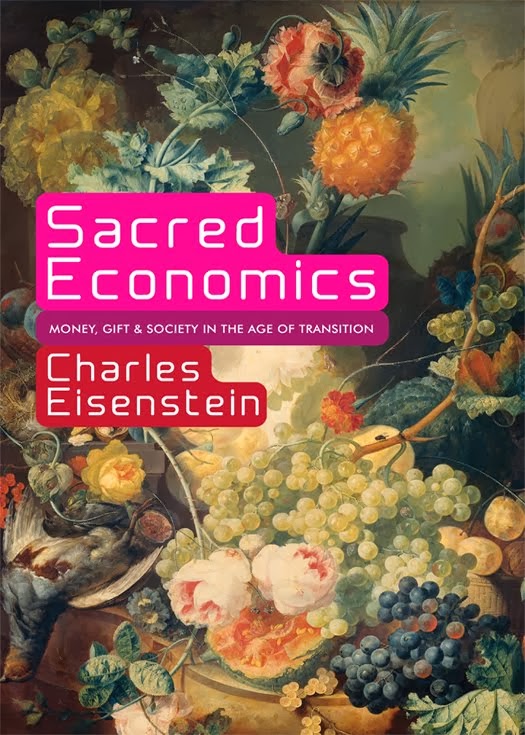
Excerpt from Charles Eisenstein's book "Sacred Economics", CHAPTER 2 : THE ILLUSION OF SCARCITY
Greed makes sense in a context of scarcity. Our reigning ideology assumes it: it is built in to our Story of Self. The separate self in a universe governed by hostile or indifferent forces is always at the edge of extinction, and secure only to the extent that it can control these forces. Cast into an objective universe external to ourselves, we must compete with each other for limited resources. Based on the story of the separate self, both biology and economics have therefore written greed into their basic axioms. In biology it is the gene seeking to maximize reproductive self-interest; in economics it is the rational actor seeking to maximize financial self-interest. But what if the assumption of scarcity is false—a projection of our ideology, and not the ultimate reality? If so, then greed is not written into our biology but is a mere symptom of the perception of scarcity.
An indication that greed reflects the perception rather than the reality of scarcity is that rich people tend to be less generous than poor people. In my experience, poor people quite often lend or give each other small sums that, proportionally speaking, would be the equivalent of half a rich person’s net worth. Extensive research backs up this observation. A large 2002 survey by Independent Sector, a nonprofit research organization, found that Americans making less than $25,000 gave 4.2 percent of their income to charity, as opposed to 2.7 percent for people making over $100,000. More recently, Paul Piff, a social psychologist at University of California–Berkeley, found that “lower-income people were more generous, charitable, trusting and helpful to others than were those with more wealth.” Piff found that when research subjects were given money to anonymously distribute between themselves and a partner (who would never know their identity), their generosity correlated inversely to their socioeconomic status.
While it is tempting to conclude from this that greedy people become wealthy, an equally plausible interpretation is that wealth makes people greedy. Why would this be? In a context of abundance greed is silly; only in a context of scarcity is it rational. The wealthy perceive scarcity where there is none. They also worry more than anybody else about money. Could it be that money itself causes the perception of scarcity? Could it be that money, nearly synonymous with security, ironically brings the opposite? The answer to both these questions is yes. On the individual level, rich people have a lot more “invested” in their money and are less able to let go of it. (To let go easily reflects an attitude of abundance.) On the systemic level, as we shall see, scarcity is also built in to money, a direct result of the way it is created and circulated.
The assumption of scarcity is one of the two central axioms of economics. (The second is that people naturally seek to maximize their rational self-interest.) Both are false; or, more precisely, they are true only within a narrow realm, a realm that we, the frog at the bottom of the well, mistake for the whole of reality. As is so often the case, what we take to be objective truth is actually a projection of our own condition onto the “objective” world. So immersed in scarcity are we that we take it to be the nature of reality. But in fact, we live in a world of abundance. The omnipresent scarcity we experience is an artifact: of our money system, of our politics, and of our perceptions.
----
Obviously there's a lot before and after this that will answer most doubts that may come up. I recommend you read the book. http://www.sacred-economics.com
Thursday, December 12, 2013
Man in Africa who recovered from AIDS using an "orgone zapper"
Excerpt from an ebook shared on http://www.orgoniseafrica.com
In recent months the case of Mr Nathan Kagina has created some excitement in Uganda. He was on the brink of dying from AIDS when he started using an orgone zapper (a Don Croft Terminator). Within 6 weeks, he had recovered completely and is now responding to blood tests as HIV negative. His case was published in all major Ugandan newspapers, and has led the Health Department to acknowledging the zapper as a legitimate treatment for HIV/AIDS. Nathan Kagina is a Ugandan citizen who recovered completely from full blown AIDS, using one of our zappers. Here is his story:

"Hello,
Yes, I am Nathan Kagina and I did promote the Terminator on National T.V., Radio, and Newspapers [here in my home country of Uganda]. The response and requests for more information and availability is overwhelming. Uganda has a population of about 30 million people and 20% are now living with HIV/AIDS and need this treatment. The government chemist, Minister of Health, Dr Grace Nambatya Kyeyune, has now included the ZAPPER for HIV treatment in Uganda, officially, on the basis of my own research, testimony and case study.
The Zapper is amazingly the most important scientific discovery since the Atomic Bomb but based on laws of magnetism.
In just six months of using the Zapper my viral load fell from millions per sample to an undetectable level.
This is bad news for the drug cartel and good news for millions living with HIV/AIDS, world-wide.
Thank you for your quick response and for your offer to give me a couple of Terminators.
Attached, find photos taken on the point of death (a memory photo with my wife and children) then the second photograph, after recovery.
Thank you DON for saving my life!.
Kind regards,
Mr Nathan Kagina, P.O. Box 16264
Kampala, Uganda
Email: nathan_kagina [at] yahoo.co.uk
Tele: +256782690197 "
So, invitations to the skeptics out there to cross-check this. I've been looking into this more than just this case and have made my decisions on what to believe and what not to.
In recent months the case of Mr Nathan Kagina has created some excitement in Uganda. He was on the brink of dying from AIDS when he started using an orgone zapper (a Don Croft Terminator). Within 6 weeks, he had recovered completely and is now responding to blood tests as HIV negative. His case was published in all major Ugandan newspapers, and has led the Health Department to acknowledging the zapper as a legitimate treatment for HIV/AIDS. Nathan Kagina is a Ugandan citizen who recovered completely from full blown AIDS, using one of our zappers. Here is his story:

"Hello,
Yes, I am Nathan Kagina and I did promote the Terminator on National T.V., Radio, and Newspapers [here in my home country of Uganda]. The response and requests for more information and availability is overwhelming. Uganda has a population of about 30 million people and 20% are now living with HIV/AIDS and need this treatment. The government chemist, Minister of Health, Dr Grace Nambatya Kyeyune, has now included the ZAPPER for HIV treatment in Uganda, officially, on the basis of my own research, testimony and case study.
The Zapper is amazingly the most important scientific discovery since the Atomic Bomb but based on laws of magnetism.
In just six months of using the Zapper my viral load fell from millions per sample to an undetectable level.
This is bad news for the drug cartel and good news for millions living with HIV/AIDS, world-wide.
Thank you for your quick response and for your offer to give me a couple of Terminators.
Attached, find photos taken on the point of death (a memory photo with my wife and children) then the second photograph, after recovery.
Thank you DON for saving my life!.
Kind regards,
Mr Nathan Kagina, P.O. Box 16264
Kampala, Uganda
Email: nathan_kagina [at] yahoo.co.uk
Tele: +256782690197 "
So, invitations to the skeptics out there to cross-check this. I've been looking into this more than just this case and have made my decisions on what to believe and what not to.
Monday, December 9, 2013
Questions about CNG
Comment on http://www.indiatogether.org/2012/aug/eco-cng.htm
Thank you for this article. I'd like to point out an observation : I
fear that this article carries in it an unexamined assumption that there
is infinite amount of CNG available without any cost or hazard. I
request that you also bring in an analysis of where the CNG is coming
from. It's natural gas.
How is it extracted?
If I'm seeing widespread protests in the world's most industrialized
countries against natural gas extraction through fracking; if they don't
have the technology to do it cleanly and without tremendous damage, then
what are we doing?
What happens to stored CNG when a natural or manmade disaster strikes?
Is India's infrastructure more advanced than theirs, or China's where a
massive natural gas pipe explosion killed scores of people in a city
recently?
CNG is a fossil fuel, and using isn't doing anything to repair the
dumping of CO2 into the atmosphere. Are we solving the problem or are we
exchanging one problem with another?
Thank you for this article. I'd like to point out an observation : I
fear that this article carries in it an unexamined assumption that there
is infinite amount of CNG available without any cost or hazard. I
request that you also bring in an analysis of where the CNG is coming
from. It's natural gas.
How is it extracted?
If I'm seeing widespread protests in the world's most industrialized
countries against natural gas extraction through fracking; if they don't
have the technology to do it cleanly and without tremendous damage, then
what are we doing?
What happens to stored CNG when a natural or manmade disaster strikes?
Is India's infrastructure more advanced than theirs, or China's where a
massive natural gas pipe explosion killed scores of people in a city
recently?
CNG is a fossil fuel, and using isn't doing anything to repair the
dumping of CO2 into the atmosphere. Are we solving the problem or are we
exchanging one problem with another?
From subject-ship to citizenship
Really liked this article.
http://indiaopines.com/yogendra-yadav-interview/
Excerpt:
"If you ask me for an overall caption for the AAP movement, it would be,
from subject-ship to citizenship. People who think they can demand
things of their rulers, people who believe they have certain rights, who
are not becharaas (the helpless) who are not to be taken for granted,
and that the rulers are not mai-baap. And that's a very major transition."
http://indiaopines.com/yogendra-yadav-interview/
Excerpt:
"If you ask me for an overall caption for the AAP movement, it would be,
from subject-ship to citizenship. People who think they can demand
things of their rulers, people who believe they have certain rights, who
are not becharaas (the helpless) who are not to be taken for granted,
and that the rulers are not mai-baap. And that's a very major transition."
Sunday, December 8, 2013
Unexamined assumptions behind UID
I feel that there are some unexamined assumptions behind the whole citizen ID card thing.
One is that the top decision makers in government and the govt machinery are foolproof, infallible people who will never betray their citizens for their personal advantage.
Another is that the way to solve the problems of the day is by having maximum control over everything... by id'ing, tracking everything and everyone, and that we all need a perfect someone on top to keep a close watch over everything.
And yet another assumption is that the problems facing society originate from the population at large and particularly from those at the bottom of the societal/financial pyramid; and not from the elites and rulers at the top of the pyramid. We feel that all the poverty, hunger, deaths, child malnutrition, separation, pollution, disempowerment, discrimination, negativity etc is because of those sneaky people running away from unforgiving debt or fleeing persecution because of sexual orientation or life partner choices or being evicted out of their ancestral lands.... we think these people on the fringes of our society have no right to be burdening our infrastructure and clogging our welfare services. So they're the problem and they should all be tracked, ID'd, denied any basic human dignity because they can't prove that they're one of us, criminalized for not being "proper", and stamped out.

And then again... we make the assumption that finally we'll be able to devise a heavy, sophisticated system that will be able to ensure that despite having unlimited funds, extensive mafia links and questionable ties with the ruling elites of our society who are running this system, no "terrorist" can manage to fake his way through.
One is that the top decision makers in government and the govt machinery are foolproof, infallible people who will never betray their citizens for their personal advantage.
Another is that the way to solve the problems of the day is by having maximum control over everything... by id'ing, tracking everything and everyone, and that we all need a perfect someone on top to keep a close watch over everything.
And yet another assumption is that the problems facing society originate from the population at large and particularly from those at the bottom of the societal/financial pyramid; and not from the elites and rulers at the top of the pyramid. We feel that all the poverty, hunger, deaths, child malnutrition, separation, pollution, disempowerment, discrimination, negativity etc is because of those sneaky people running away from unforgiving debt or fleeing persecution because of sexual orientation or life partner choices or being evicted out of their ancestral lands.... we think these people on the fringes of our society have no right to be burdening our infrastructure and clogging our welfare services. So they're the problem and they should all be tracked, ID'd, denied any basic human dignity because they can't prove that they're one of us, criminalized for not being "proper", and stamped out.

And then again... we make the assumption that finally we'll be able to devise a heavy, sophisticated system that will be able to ensure that despite having unlimited funds, extensive mafia links and questionable ties with the ruling elites of our society who are running this system, no "terrorist" can manage to fake his way through.
Saturday, December 7, 2013
The Surprising Healing Qualities of Dirt
Here's something I'm reading which I'm personally experiencing as well recently:
http://www.yesmagazine.org/issues/how-to-eat-like-our-lives-depend-on-it/how-dirt-heals-us?utm_source=YTW&utm_medium=Email&utm_campaign=20131206
Some excerpts:
"While soil scientists are busy documenting these soil-to-food links, immunologists and allergists in Europe are working above ground to uncover another intriguing soil-health connection, the so-called "farm effect." Why is it that children raised on ecologically managed farms in Central Europe have much lower rates of allergy and asthma than urban children or those raised on industrialized farms? Once again, almost everything points to microbes—in manure, in unpasteurized milk, in stable dust, on unwashed food and, yes, in the soil. In one study, researchers cultured farm children's mattresses and found a potpourri of bacteria—most of which are typically found in soil."
....
"But what if our own immune cells are simply a backup mechanism to a more sophisticated first line of defense—our resident microbes?
And what if a healthy and diverse soil microbiome can foster a more diverse and protective human microbiome?"
....
"A group of French microbiologists were among the first to document this game of pass-the-gene when they identified the exact same sequence of DNA in two different Bacteroidetes bacteria species, one living on seaweed and the other in the intestines of Japanese people. They concluded that the marine bacteria had hitchhiked their way into the human gut via sushi and other seaweed dishes and passed their seaweed-digesting DNA on to resident microbes of the human host. The end result of this exchange is that many Japanese—and possibly people from other seaweed-eating cultures—have acquired a greater ability than the rest of us to extract valuable nutrients from their nori."
....
"Thinking of a healthy body as an extension of a healthy farm, and vice versa, is a paradigm shift for many of us. But when we consider that all of our cells get their building blocks from plants and soil then, suddenly, it all makes sense. In fact, it is not too much of a stretch to say: We are soil."
The Surprising Healing Qualities ... of Dirt
A doctor discovers exposure to healthy farm soil holds keys to healthy bodieshttp://www.yesmagazine.org/issues/how-to-eat-like-our-lives-depend-on-it/how-dirt-heals-us?utm_source=YTW&utm_medium=Email&utm_campaign=20131206
Some excerpts:
"While soil scientists are busy documenting these soil-to-food links, immunologists and allergists in Europe are working above ground to uncover another intriguing soil-health connection, the so-called "farm effect." Why is it that children raised on ecologically managed farms in Central Europe have much lower rates of allergy and asthma than urban children or those raised on industrialized farms? Once again, almost everything points to microbes—in manure, in unpasteurized milk, in stable dust, on unwashed food and, yes, in the soil. In one study, researchers cultured farm children's mattresses and found a potpourri of bacteria—most of which are typically found in soil."
....
"But what if our own immune cells are simply a backup mechanism to a more sophisticated first line of defense—our resident microbes?
And what if a healthy and diverse soil microbiome can foster a more diverse and protective human microbiome?"
....
"A group of French microbiologists were among the first to document this game of pass-the-gene when they identified the exact same sequence of DNA in two different Bacteroidetes bacteria species, one living on seaweed and the other in the intestines of Japanese people. They concluded that the marine bacteria had hitchhiked their way into the human gut via sushi and other seaweed dishes and passed their seaweed-digesting DNA on to resident microbes of the human host. The end result of this exchange is that many Japanese—and possibly people from other seaweed-eating cultures—have acquired a greater ability than the rest of us to extract valuable nutrients from their nori."
....
"Thinking of a healthy body as an extension of a healthy farm, and vice versa, is a paradigm shift for many of us. But when we consider that all of our cells get their building blocks from plants and soil then, suddenly, it all makes sense. In fact, it is not too much of a stretch to say: We are soil."
Nelson Mandela quotes that you won't find in mainstream media
From http://www.commondreams.org/headline/2013/12/06-0
- "A critical, independent and investigative press is the lifeblood of any democracy. The press must be free from state interference. It must have the economic strength to stand up to the blandishments of government officials. It must have sufficient independence from vested interests to be bold and inquiring without fear or favor. It must enjoy the protection of the constitution, so that it can protect our rights as citizens."
- "If there is a country that has committed unspeakable atrocities in the world, it is the United States of America. They don't care for human beings."
- "The current world financial crisis also starkly reminds us that many of the concepts that guided our sense of how the world and its affairs are best ordered, have suddenly been shown to be wanting.”
- "Gandhi rejects the Adam Smith notion of human nature as motivated by self-interest and brute needs and returns us to our spiritual dimension with its impulses for nonviolence, justice and equality. He exposes the fallacy of the claim that everyone can be rich and successful provided they work hard. He points to the millions who work themselves to the bone and still remain hungry."
- "There is no doubt that the United States now feels that they are the only superpower in the world and they can do what they like."
- “It is said that no one truly knows a nation until one has been inside its jails. A nation should not be judged by how it treats its highest citizens, but its lowest ones.”
- “Overcoming poverty is not a task of charity, it is an act of justice. Like Slavery and Apartheid, poverty is not natural. It is man-made and it can be overcome and eradicated by the actions of human beings. Sometimes it falls on a generation to be great. YOU can be that great generation. Let your greatness blossom.”
- “We know too well that our freedom is incomplete without the freedom of the Palestinians.”
- “No single person can liberate a country. You can only liberate a country if you act as a collective.”
- "If the United States of America or Britain is having elections, they don't ask for observers from Africa or from Asia. But when we have elections, they want observers."
- “When a man is denied the right to live the life he believes in, he has no choice but to become an outlaw.”
- On Gandhi: "From his understanding of wealth and poverty came his understanding of labor and capital, which led him to the solution of trusteeship based on the belief that there is no private ownership of capital; it is given in trust for redistribution and equalization. Similarly, while recognizing differential aptitudes and talents, he holds that these are gifts from God to be used for the collective good."
Wednesday, December 4, 2013
The project in teaching that I wasn't able to do
Sharing a part of an email to a friend. TFI stands for Teach for India :
an educational NGO that I worked with in 2011-12 and where I publicly
walked out of in protest.. that's another story.
What you mentioned... " TFI classrooms to have absolute autonomy in
their curriculum, evaluation, instruction"...well well!
Long before my walkng-out, this is exactly what I had proposed to Pune
city team one month into my Fellowship when I was pulled up and
reprimanded for my poor performance. I shared with them Astra taylor's
talk on unschooled life and some other resources I'd found, and gave
them a challenge that for the next 2 units (ie, 3 months), I wanted
complete autonomy and freedom from TFI, esp the weekly testing ,
tracking regime. In exchange I offered that I won't take any salary or
reimbursements for the next 3 months. That way if I screwed up, TFI
could simply end my fellowship, say I wasn't even with them for last 3
months, and wash their hands off the case.
I challenged them that after that period they do their assessments and
see how far the kids have come. My plan (only in vague form in my head
at the time) was to let the class be, and using the free time gained
from not having to do so much deliverables after school, and the energy
gained from not having to control the classroom during school, I'd do
one-on-one or one-on-two tutoring with each kid after school hours. I'd
found that I could easily help them master an entire week's or more of
maths/english lessons in an hour when working with them alone, but this
worked only when I didn't have any other workload.
Naturally, the proposal was immediately shot down, ridiculed, with the
logical argument that I had no right to play around with the children's
futures (apparently they held the monopoly on that). My failures to
prove effectiveness in following their system so far were used to assume
I wouldn't succeed even in my own. In hindsight I think I'd have
probably failed to prove anything (because our systems used to measure
the learning of the children were themselves flawed), but I really
wanted the kids and myself to get a breather from the onslaught and
wanted to see how they can develop if allowed to talk and interact with
each other all day.
----
Why am I sharing this? Because I'm quite sure a LOT of teachers out
there have considered this and are too afraid to talk about it out of
fear of being ridiculed.
an educational NGO that I worked with in 2011-12 and where I publicly
walked out of in protest.. that's another story.
What you mentioned... " TFI classrooms to have absolute autonomy in
their curriculum, evaluation, instruction"...well well!
Long before my walkng-out, this is exactly what I had proposed to Pune
city team one month into my Fellowship when I was pulled up and
reprimanded for my poor performance. I shared with them Astra taylor's
talk on unschooled life and some other resources I'd found, and gave
them a challenge that for the next 2 units (ie, 3 months), I wanted
complete autonomy and freedom from TFI, esp the weekly testing ,
tracking regime. In exchange I offered that I won't take any salary or
reimbursements for the next 3 months. That way if I screwed up, TFI
could simply end my fellowship, say I wasn't even with them for last 3
months, and wash their hands off the case.
I challenged them that after that period they do their assessments and
see how far the kids have come. My plan (only in vague form in my head
at the time) was to let the class be, and using the free time gained
from not having to do so much deliverables after school, and the energy
gained from not having to control the classroom during school, I'd do
one-on-one or one-on-two tutoring with each kid after school hours. I'd
found that I could easily help them master an entire week's or more of
maths/english lessons in an hour when working with them alone, but this
worked only when I didn't have any other workload.
Naturally, the proposal was immediately shot down, ridiculed, with the
logical argument that I had no right to play around with the children's
futures (apparently they held the monopoly on that). My failures to
prove effectiveness in following their system so far were used to assume
I wouldn't succeed even in my own. In hindsight I think I'd have
probably failed to prove anything (because our systems used to measure
the learning of the children were themselves flawed), but I really
wanted the kids and myself to get a breather from the onslaught and
wanted to see how they can develop if allowed to talk and interact with
each other all day.
----
Why am I sharing this? Because I'm quite sure a LOT of teachers out
there have considered this and are too afraid to talk about it out of
fear of being ridiculed.
Tuesday, December 3, 2013
Decentralized communication network network
https://commotionwireless.net/
Hoping something like this project really comes about soon!
Commotion is an open-source communication tool that uses mobile phones, computers, and
other wireless devices to create
decentralized mesh networks.
Sunday, December 1, 2013
The decline of empathy
http://www.artofmanliness.com/2010/07/25/our-disembodied-selves-and-the-decline-of-empathy/
Haven't you noticed it too, in your college or workplace? If empathy is indeed what makes civilization, then clearly we're on the path of destroying it right now.
Subscribe to:
Posts (Atom)
